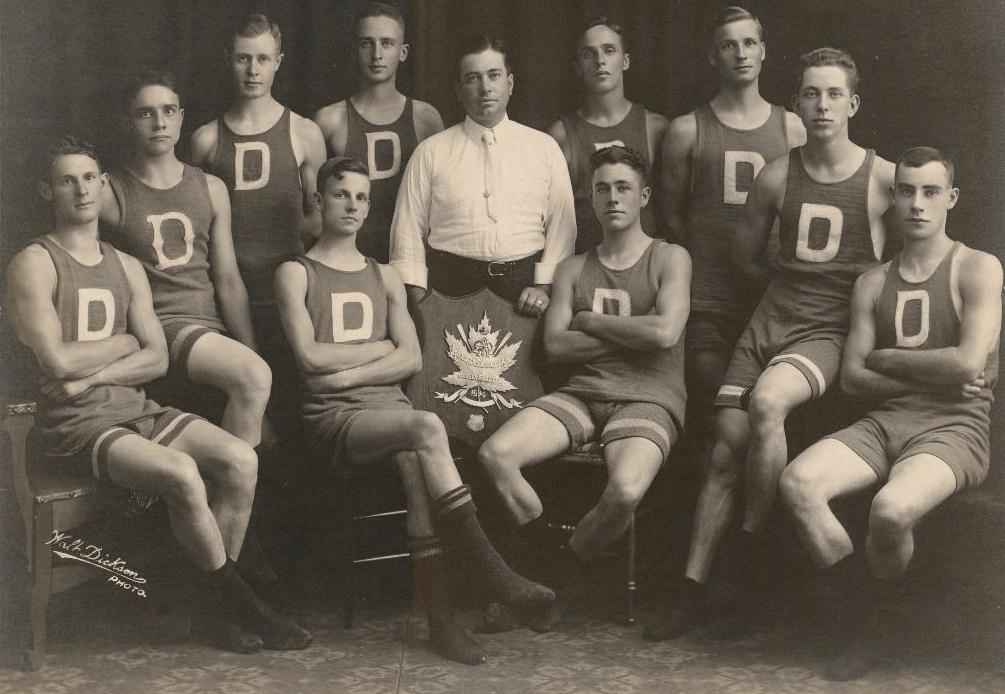
Featuring the Don Rowing Club
By Joanne Doucette
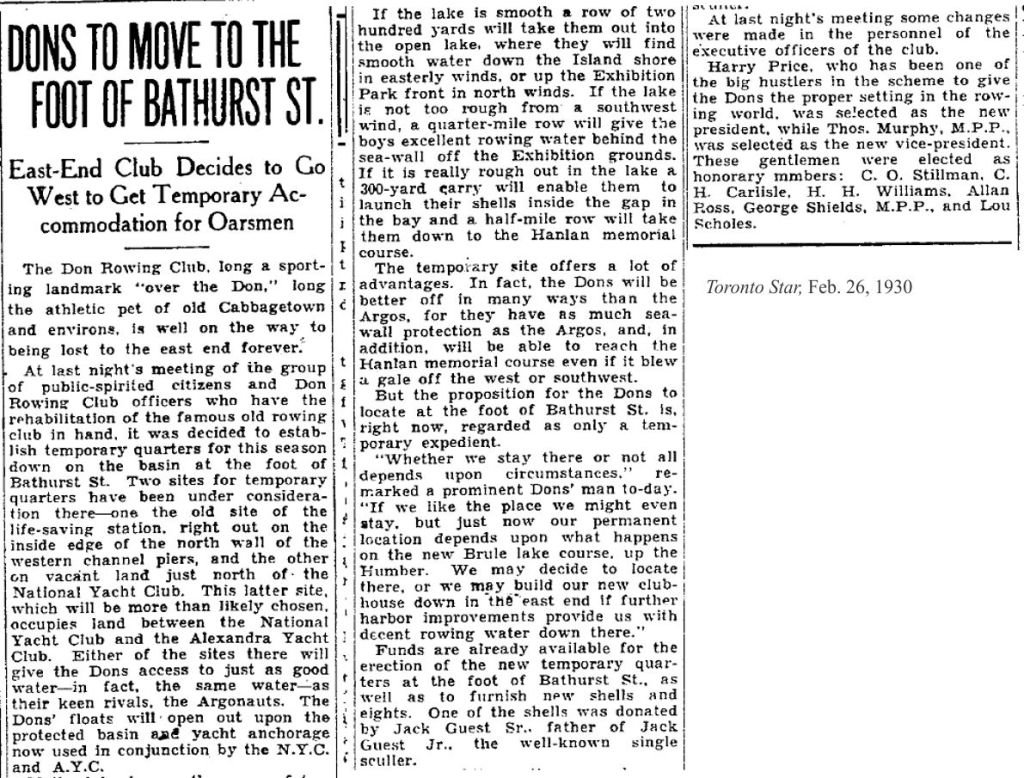
In the late 19th century, rowing became a popular competitive sport for young men with regattas held on Saturdays. Clubs were usually informal, consisting of a handful of rowing enthusiasts, with no written rules and a boatshed for a clubhouse.
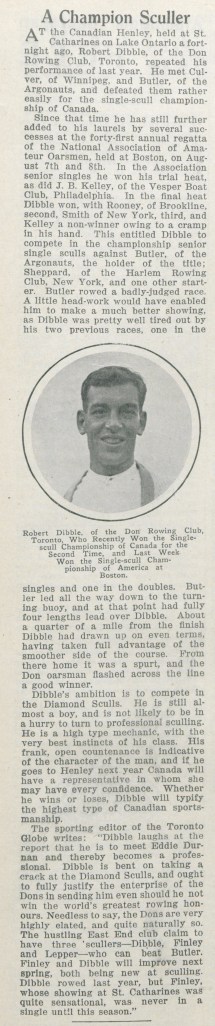
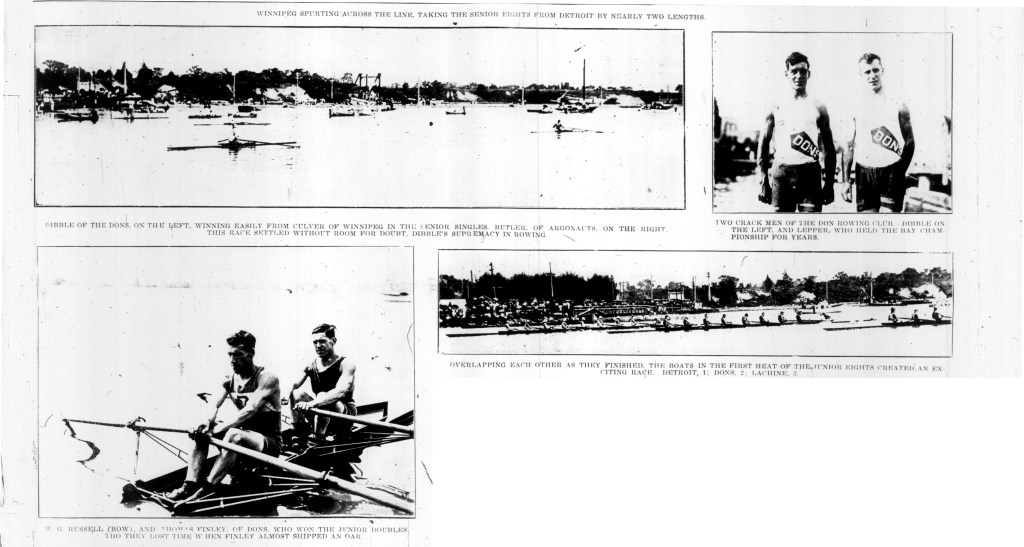
Top rowers were once star athletes like today’s hockey or baseball players. The Leslieville Rowing Club produced notable rowers such as Hugh Wise, Isaac Price, and John Russell. Although Ned Hanlan from Toronto Island was more famous, stars Robert and Harry Dibble also hailed from the East End.
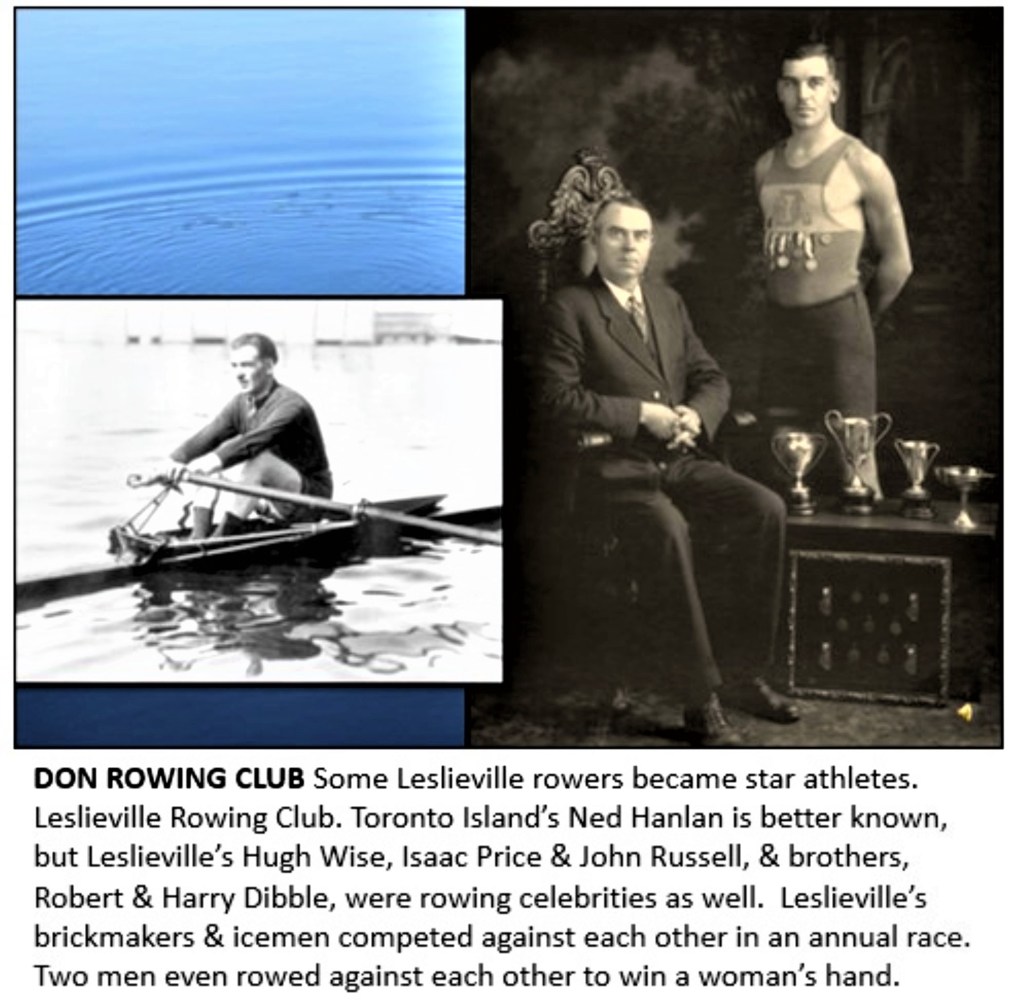
In the late 19th century, rowing became a popular competitive sport for young men with regattas held on Saturdays. Clubs were usually informal, consisting of a handful of rowing enthusiasts, with no written rules and a boatshed for a clubhouse.
Top rowers were once star athletes like today’s hockey or baseball players. The Leslieville Rowing Club produced notable rowers such as Hugh Wise, Isaac Price, and John Russell. Although Ned Hanlan from Toronto Island was more famous, stars Robert and Harry Dibble also hailed from the East End.
On Sunday afternoons, rowing sculls spread across the waters of Toronto Harbour and Ashbridge’s Bay. Leslieville’s brickmakers and icemen raced annually, using skiffs and clinker-built boats by local builders like William Laing. (Laing’s boathouse was on Laing Street south of Eastern Avenue.) In 1894, icemen Samuel Greenwood and Leonard Marsh defeated the brickmakers, led by J. Grady and Sam Heale.
In 1878, the Christie Brothers and three friends, Andrew McFarlane, T. Hogarth and J. Swanson, started the Don Rowing Club on Vine Street (now Overend Street), which bordered the Don River. The brothers owned an empty house there which became there a meeting place and a place to store boats and equipment. The club grew as more rowers joined, benefiting from the accessibility of the Humber and Don Rivers and Toronto Bay.
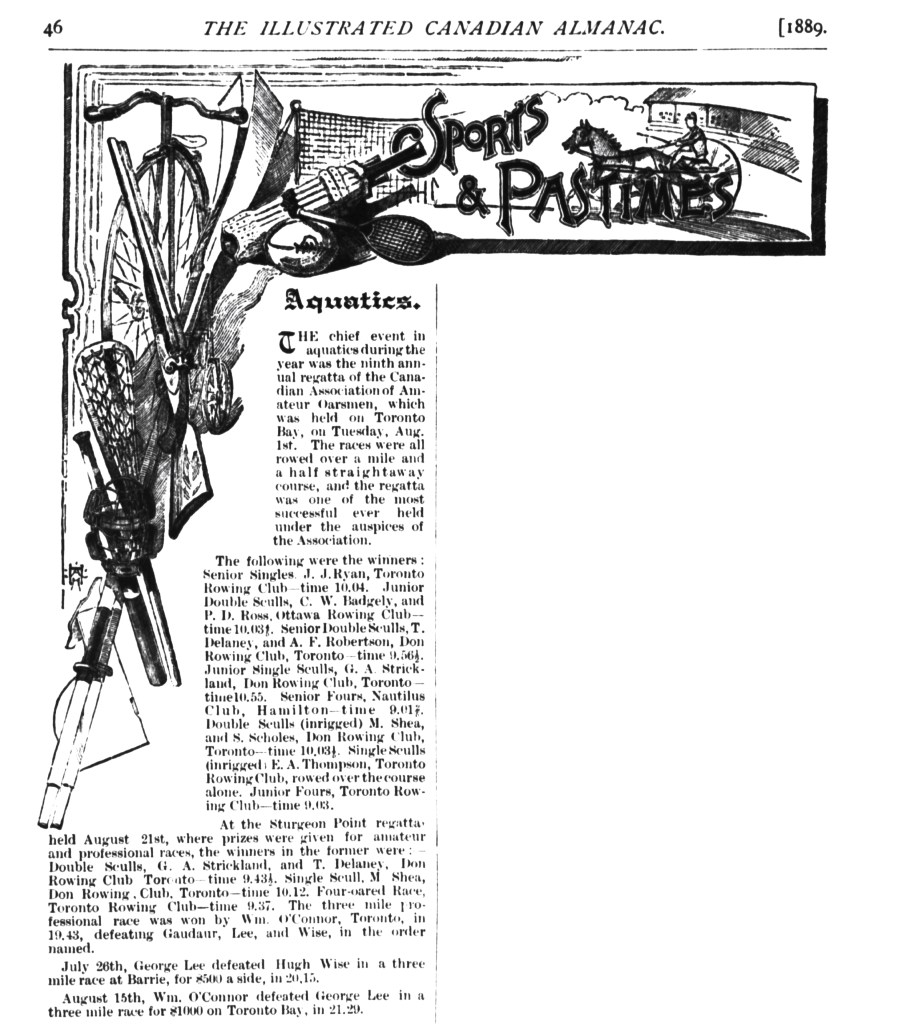
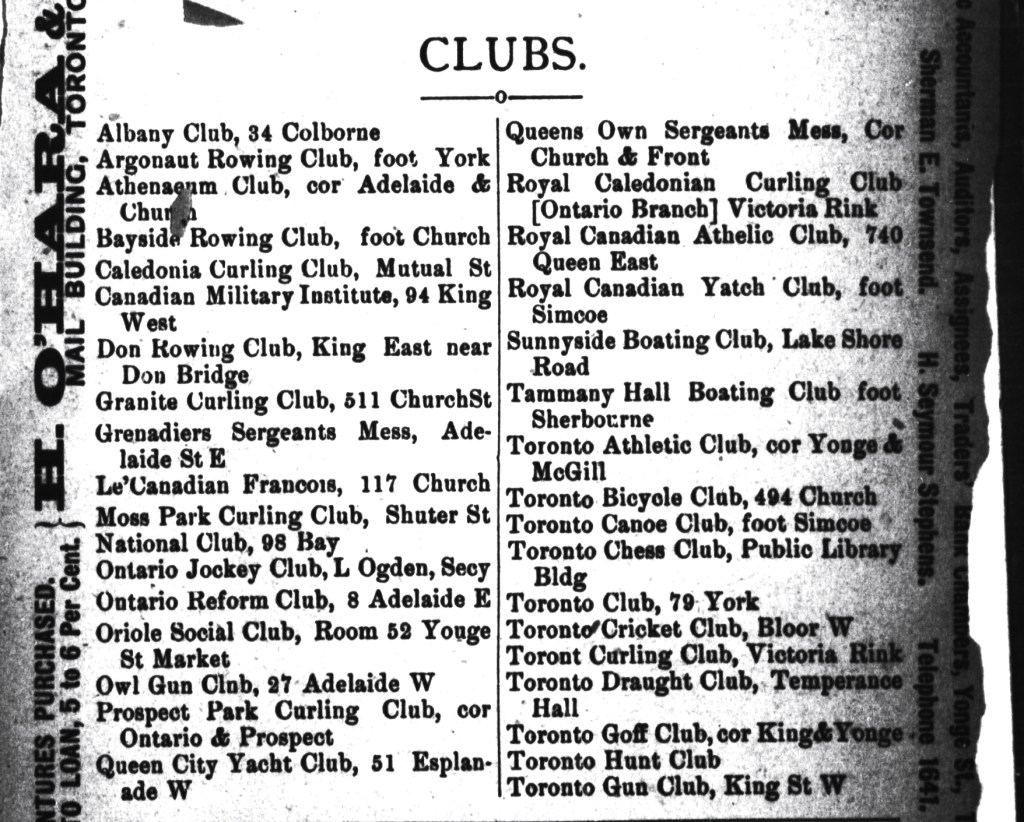
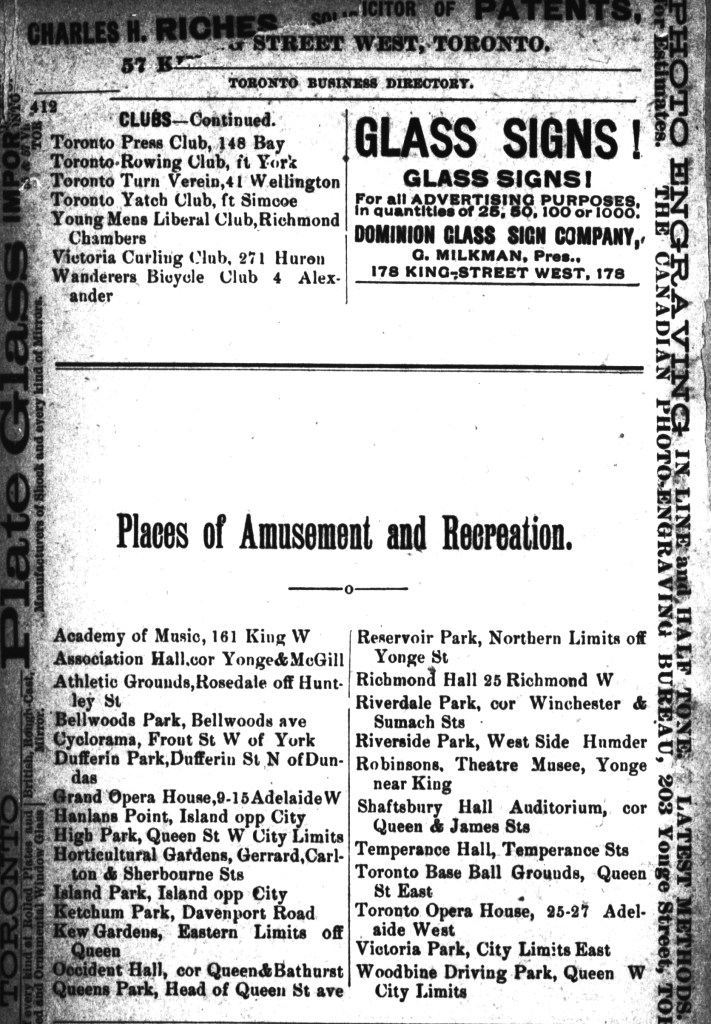
The club soon needed more space, so a boathouse was built on Eastern Avenue near the Don River, focusing on skiff rowing. In 1880, they bought a clincher four (another older style of working boat) from William Laing of Ashbridge’s Bay. However, that year, the Don River flooded the boathouse area, prompting another move to a safer location near the Queen Street bridge, where a new building was constructed near the east end of St. Lawrence Street next to the Courtney Hotel and Brickenden Brothers carriage manufacturing.
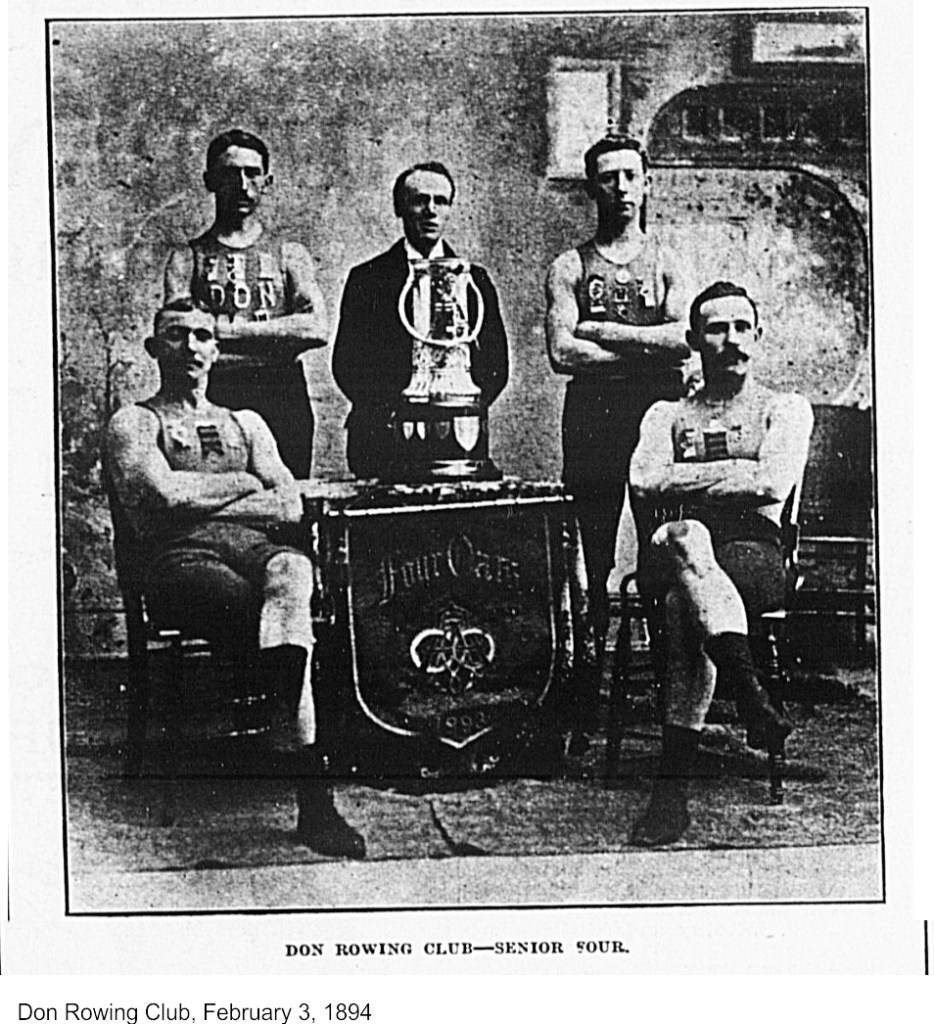
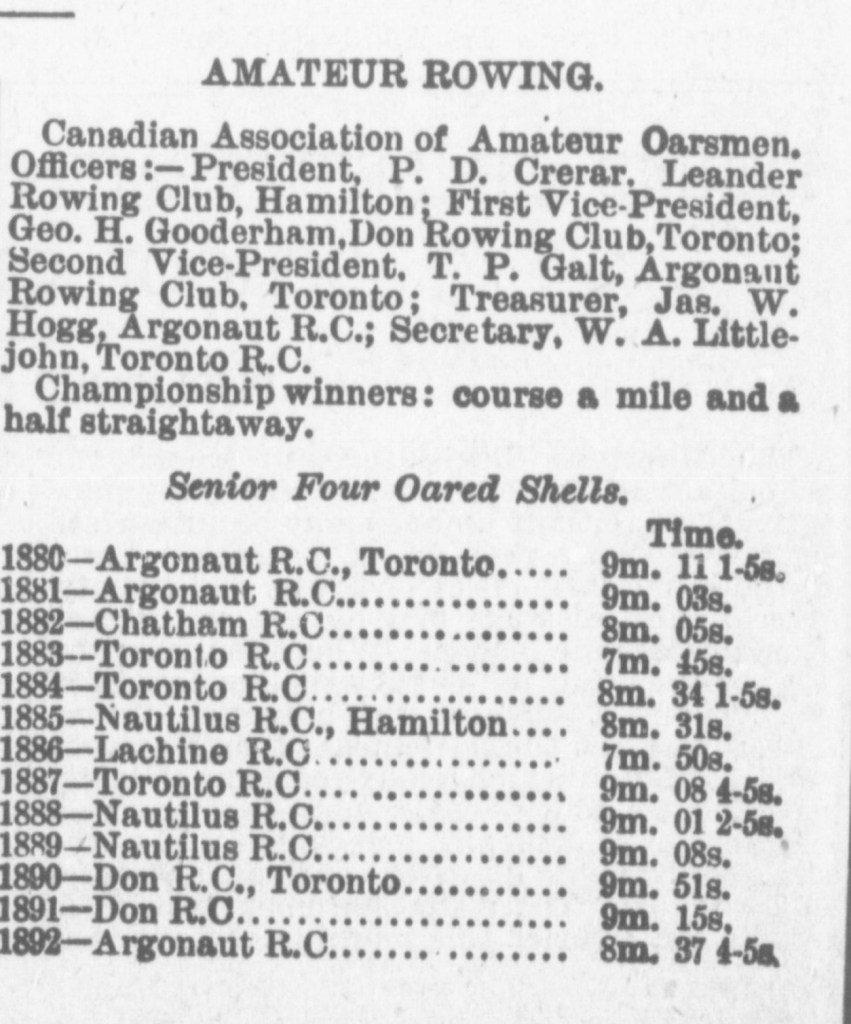
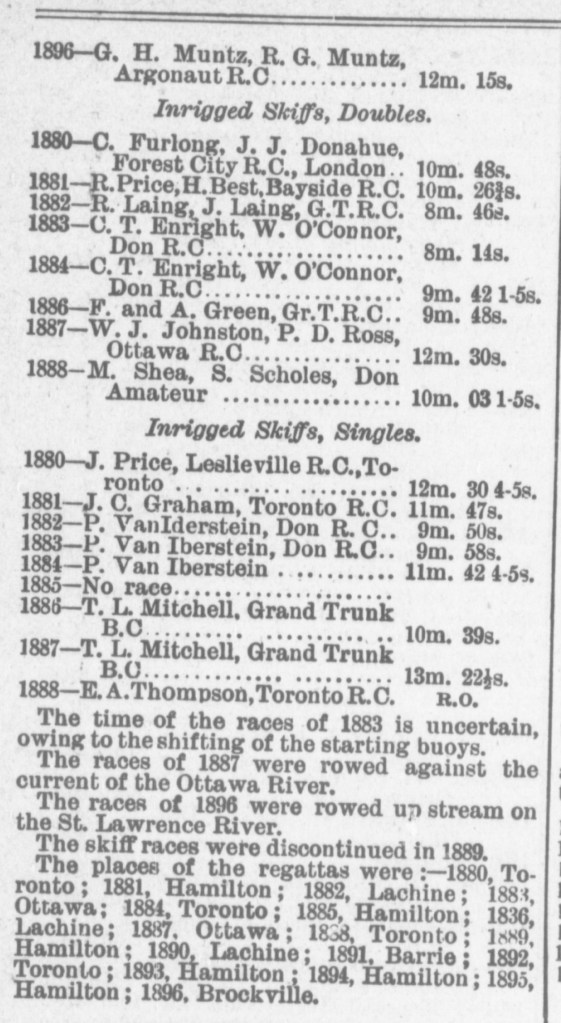
In 1898 A. R. Denison architect prepared the plans to upgrade the Dons’s clubhouse at the King Street bridge and Leslieville-born builder John E. Russell won the contract to erect the two storey, 32 x 65 feet building.
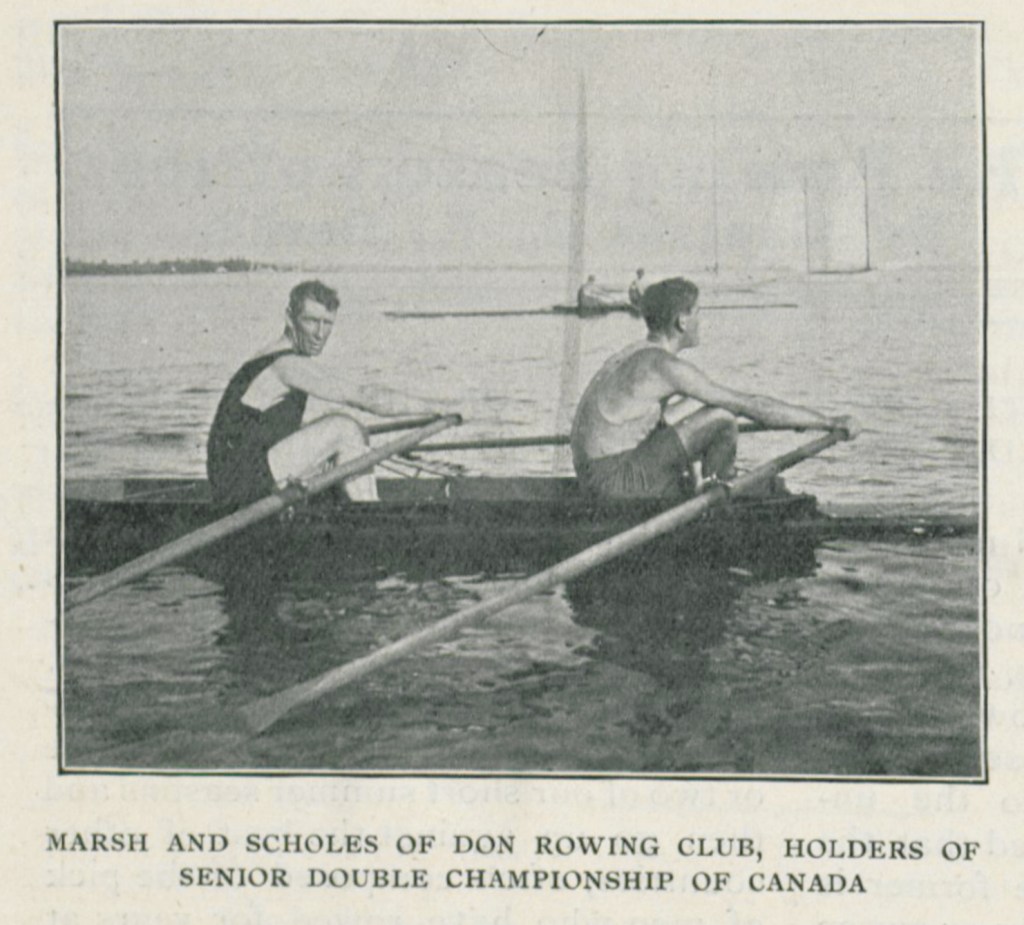
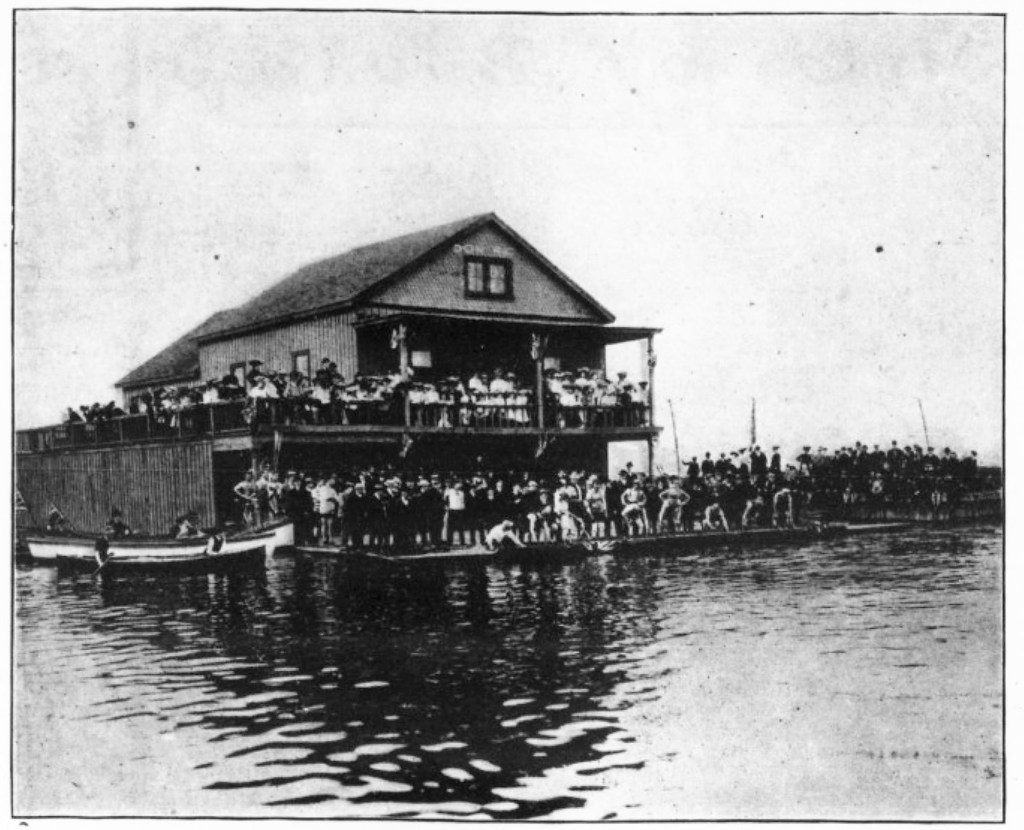
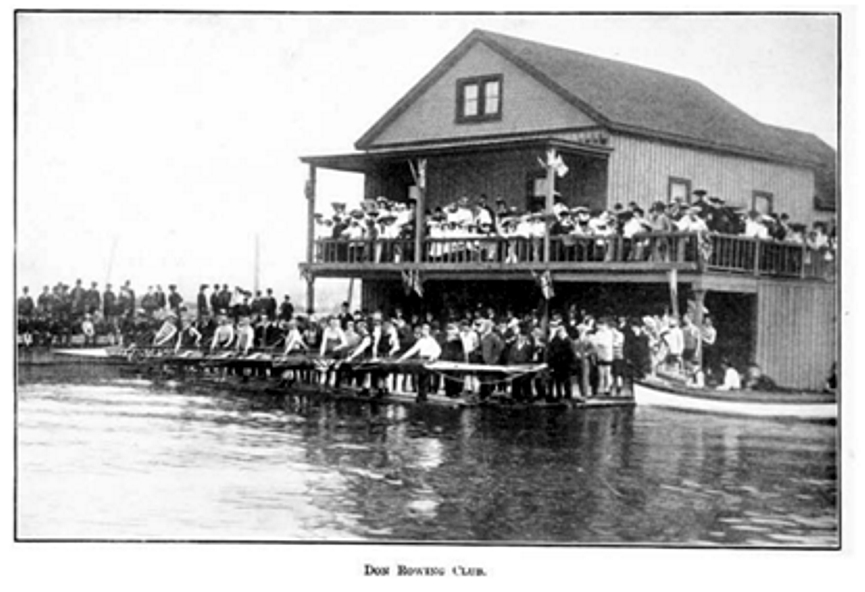
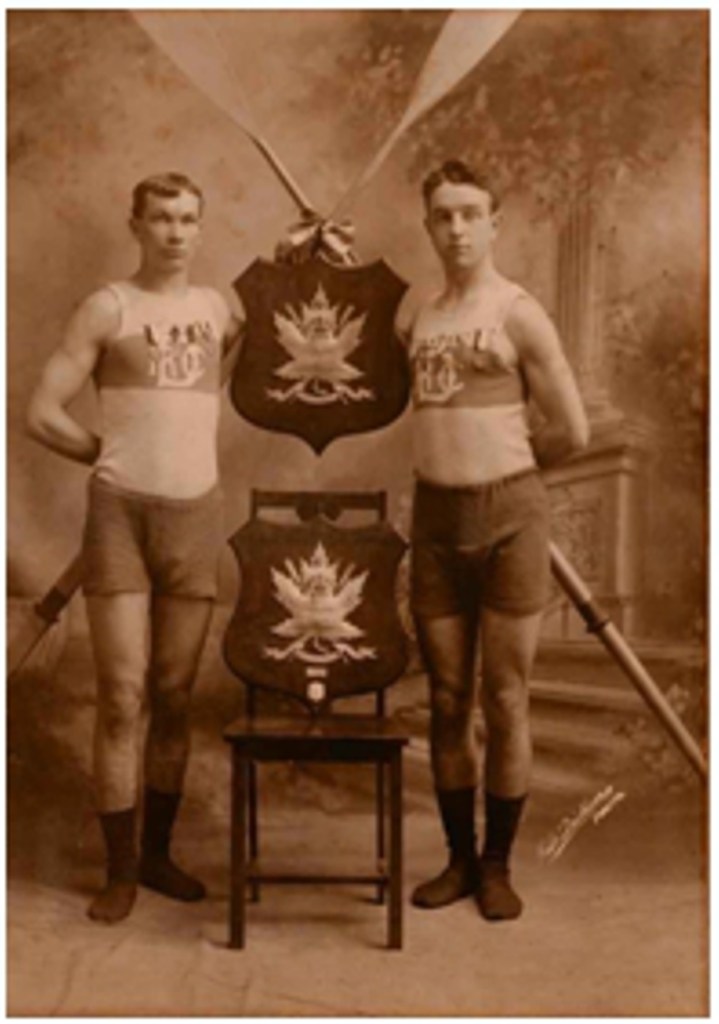
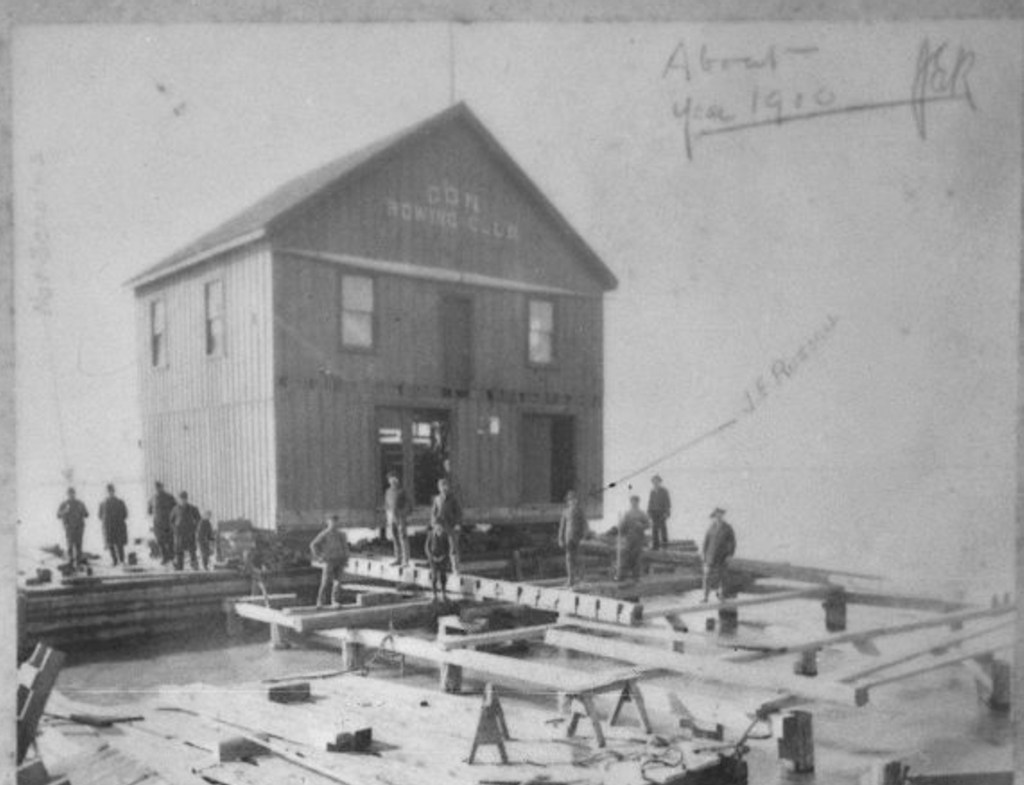
In 1910 John E. Russell moved the clubhouse from the Don River to Coatsworth’s Cut, near where the Ashbridge’s Bay Yacht Club is today at the foot of Coxwell Avenue and Lakeshore.
In1911 a new boathouse was constructed at the foot of Morley Avenue (Woodfield Road), south of Eastern Ave., on Ashbridges Bay, but it burned down the day before the big regatta.
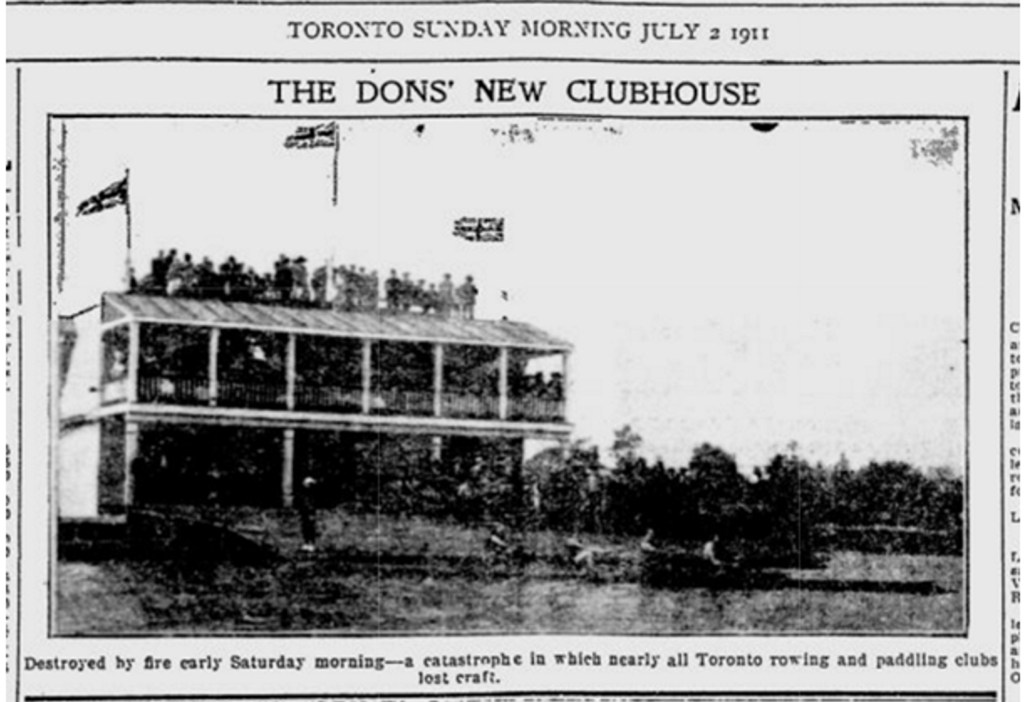
Dons Disaster Postpones The Dominion Day Regatta
Fire Destroys Club House and Every Rowing and Canoe Club in City Suffers
Regatta Will Be Held Friday and Saturday Next
Dons will Rebuild
Hard luck hit Toronto’s aquatic interests a mighty swat when the new Don Rowing Clubhouse was burned up early Saturday morning.
All the rowing and canoeing clubs suffered because of damage to equipment, but the Dons were particularly hard hit—they lost everything, clubhouse, shells, and, worst of all, the splendid trophies won on many a hard-fought course. The Dons are dazed and staggering from the blow but they will pull themselves together in a few days and start anew.
The general public also feel the disaster, for the big Dominion Day regatta, the aquatic event of the season, had to be called off. The events that were scheduled for yesterday morning will be held on Ashbridge’s Bay Friday evening at 6 o’clock, and the afternoon events will be run off next Saturday at 2 o’clock. The clubs will have some difficulty digging up shells and war canoes, but old ones will have to be patched up, and some of those damaged by the fire may admit of repairs.
The Don Rowing Club had just put up their new clubhouse this spring, and was one of the best aquatic clubhouses in the city. It had capacious verandahs overlooking the bay and 1,500 guests would have assembled there yesterday to witness the regatta. The boys had worked until a late hour decorating the clubhouse for the event and all the medals, shields, and other trophies won by the club in its several years of existence had been placed in the clubhouse.
The rowing shells of the club were on the racks, and the boats of the other clubmen who were to take part in the regatta were placed on the floors. It was because of this that some of the visitors’ shells and canoes were hauled out before they were entirely ruined. It was the inaccessibility of the Dons’ boats that caused them to be destroyed. The Dons lost all their boats, including two doubles, leaving only one double shell in Toronto, the Argonauts having broken their new …shell by running on a pile at Polson’s a few days ago.
The Argonauts lost the Hammond, their tackweight eight shell in the fire. The Toronto Rowing Club lost a working four, and the Hamilton Rowing Club’s working four was badly damaged. Two war canoes belonging to the B.C.C. and P.C.C. were also badly torched, but can be repaired.
Practically all that remains of the Don clubhouse is the float and piles, part of the walls are standing, but these would have to be removed before building is begun again. Lepper, the Don’s great senior sculler, lost both his single shells, and McCarthy, junior single sculler, suffered the loss of his single in the disaster.
The regatta committee held an emergency meeting Saturday morning at 9 o’clock, and decided that none of the events could be run off and postponed them until the end of the week.
The Hamilton oarsmen took their loss philosophically, and said they would have their boat fixed and would compete Friday and Saturday. Toronto World, July 2, 1911
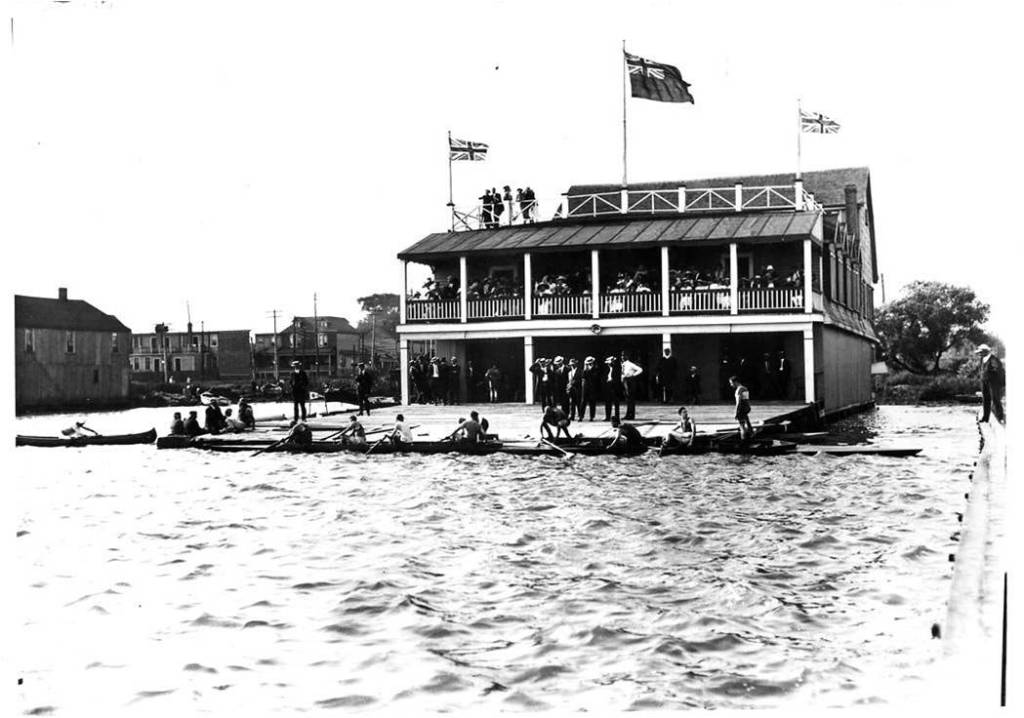
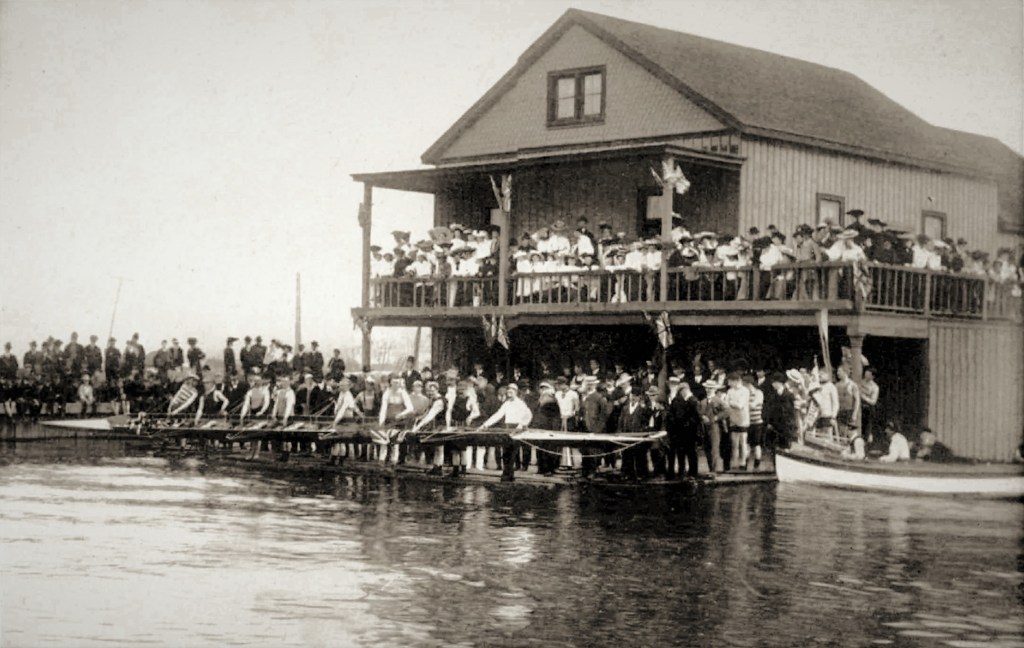
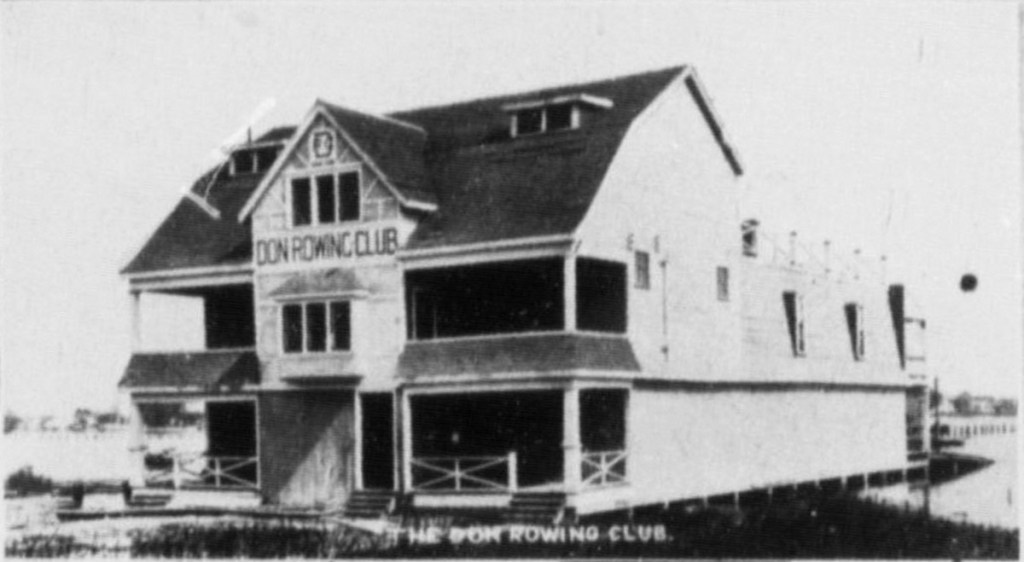
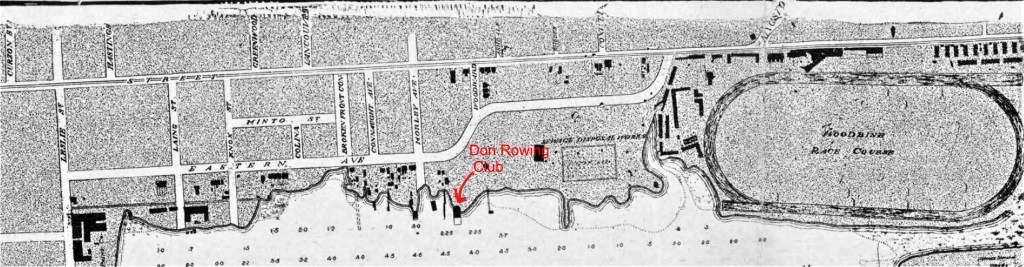
They rebuilt that summer but, when the City built the Morley Avenue Sewage Treatment Plant near their clubhouse, their location was doomed. Raw sewage from the ineffective plant spilled from the inadequate plant, turning what was left of Ashbridge’s Bay into a reeking sewage lagoon over the next two decades. Still for a while they thrived:
The Don Rowing Club will hold a big smoking concert on Saturday night in their club house at Morley avenue, and as it will be the official opening of the club for the season it is hoped that all the club members and friends will be present. There will be progressive euchre, music and refreshments, and it is expected that there will be a record breaking attendance. A cordial invitation is extended to all those interested in the Don Rowing Club’s welfare. Toronto World, May 14, 1913.
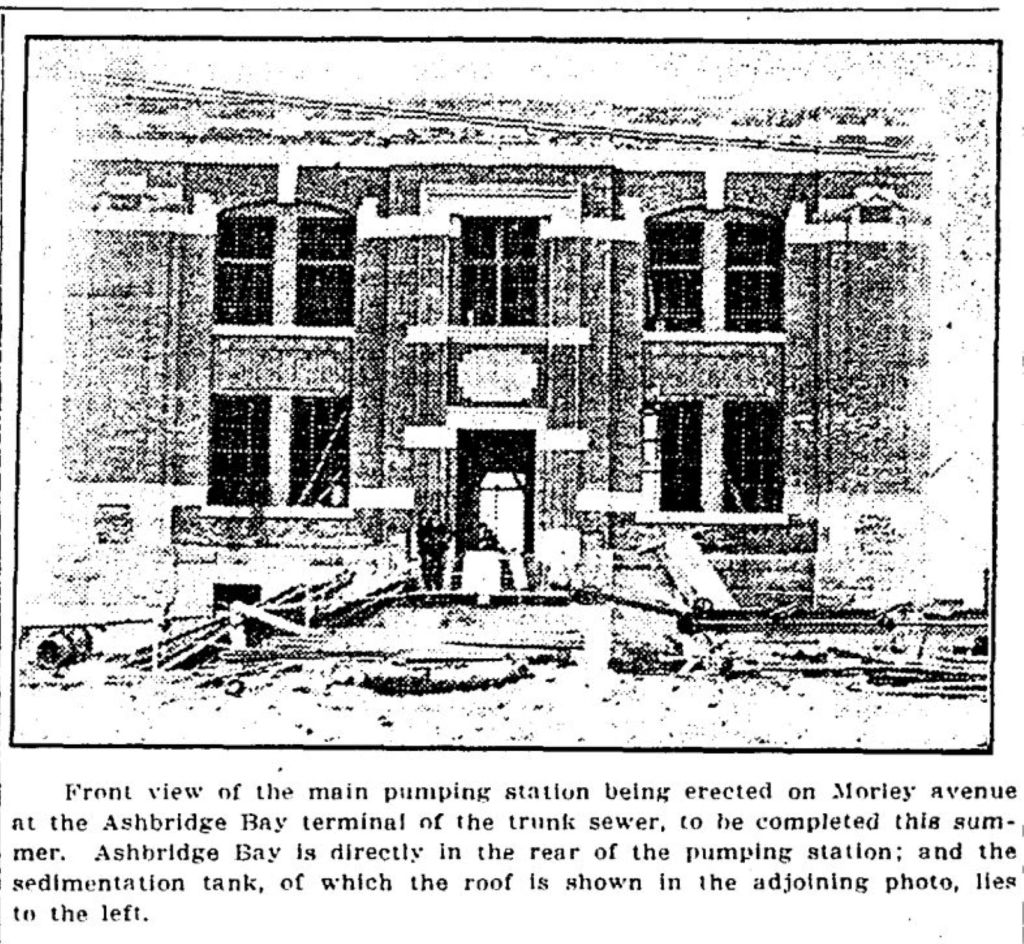

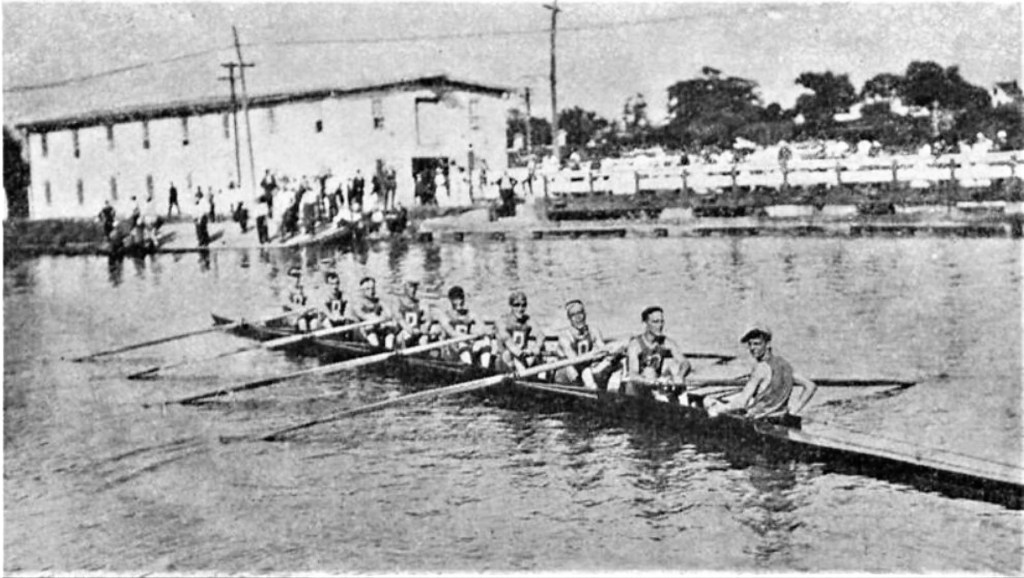

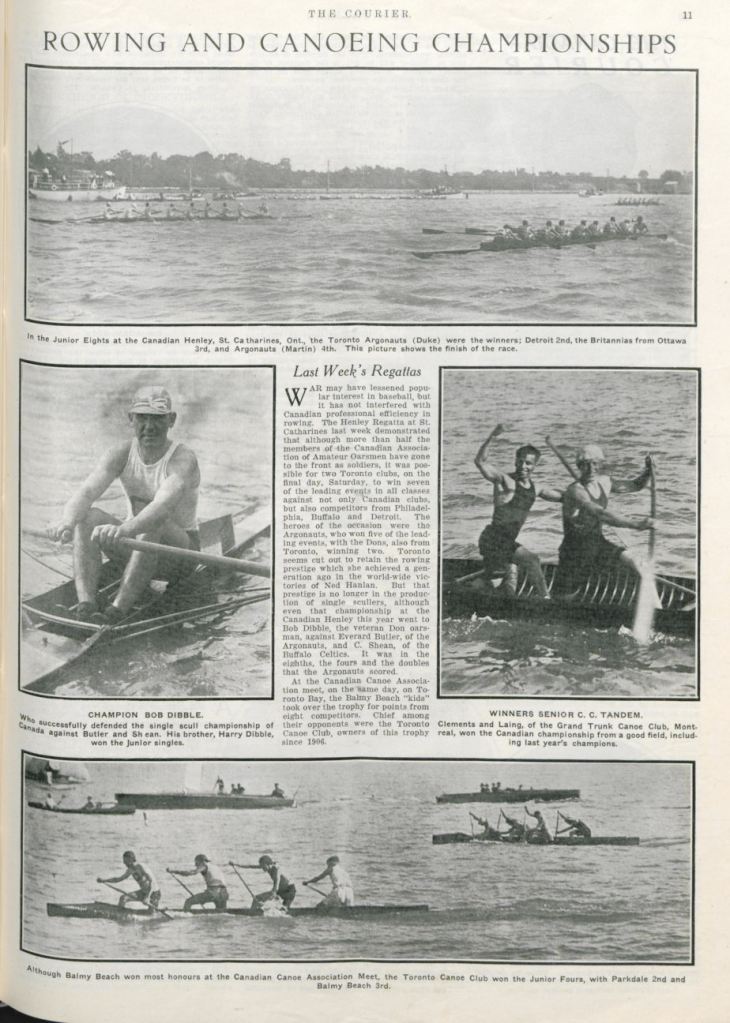
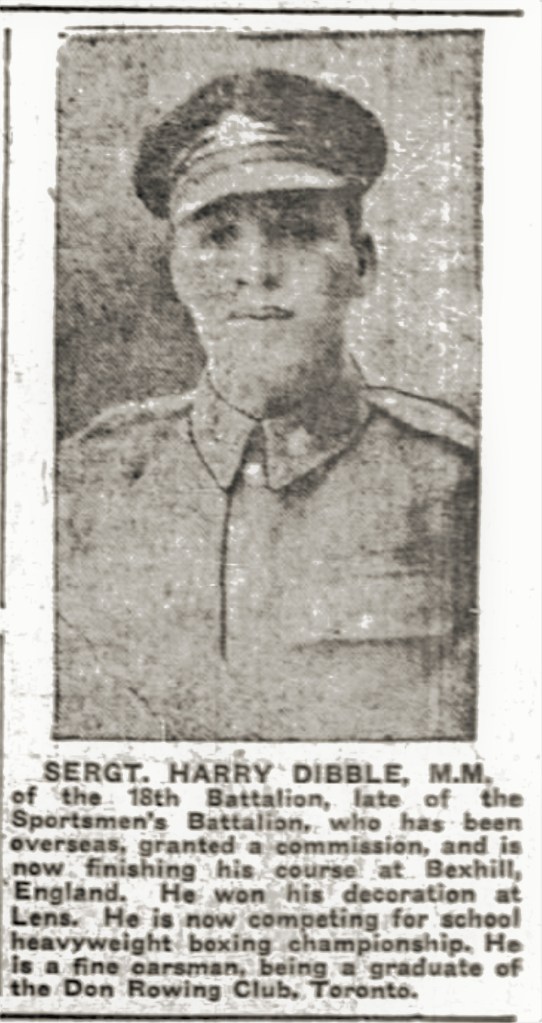
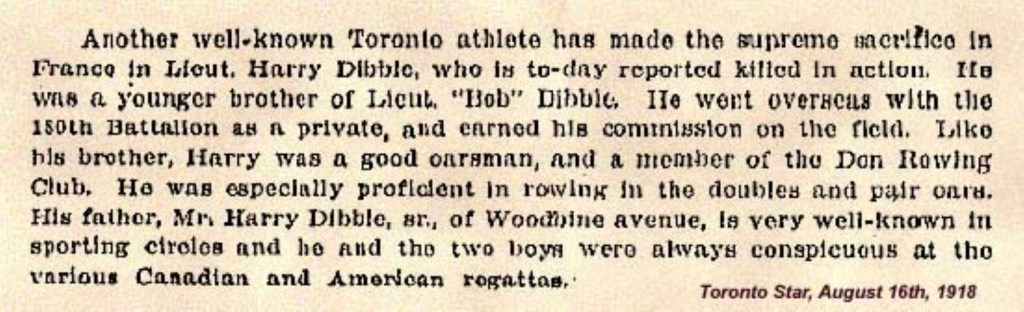

Ashbridge’s Bay was becoming increasingly polluted and even disgusting after World War One when heavy industry also dumped its effluent into Ashbridges Bay.
1921 Might’s City Directory EASTERN AVE.
North Side
GTR Crossing
Strange Street commences (now Dibble St.)
400 William Harland & Sons varnishes
408 Spink Wightman
McGee Street commences
414 – 420 Superior Oil Co. Ltd.
Empire ave. commences
Booth Avenue intersects
462-470 Brown’s Bread Ltd.
580 Macedonians
586 Foreigners
Between Caroline and Leslie not built on.
Colina St. (now part of Minto)
962-964 Toronto Railway Co. barn
South Side
GTR Crossing
Consumer’s Gas Go. Plant
481 Browns’ Bread Ltd. Stables
551 Fur Dressing & Dying Co.
633-661 A. R. Clarke & Co. glove manufacturers
665 Tolani Bros. gardeners
873 Catherine Finucan
921 Frederick Morley
923 Henry Graham
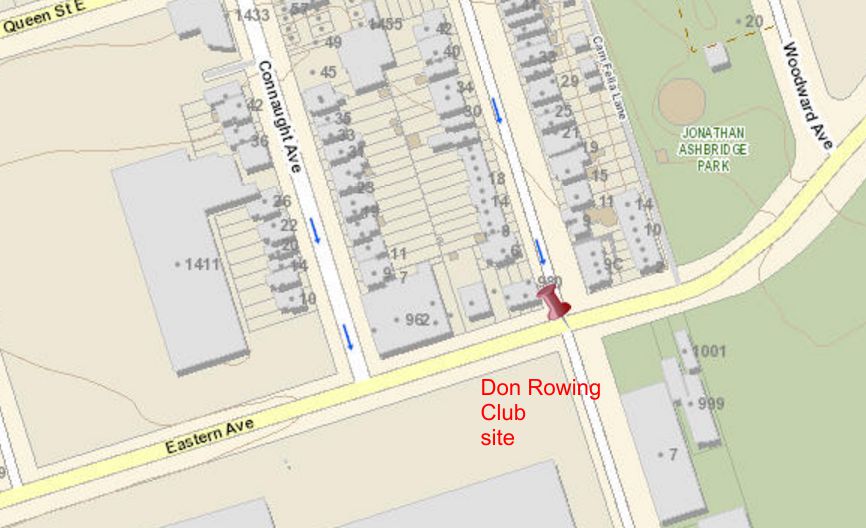
1017 -21 Don Rowing Club
1033 City Sewage Disposal Works and Engineers Office
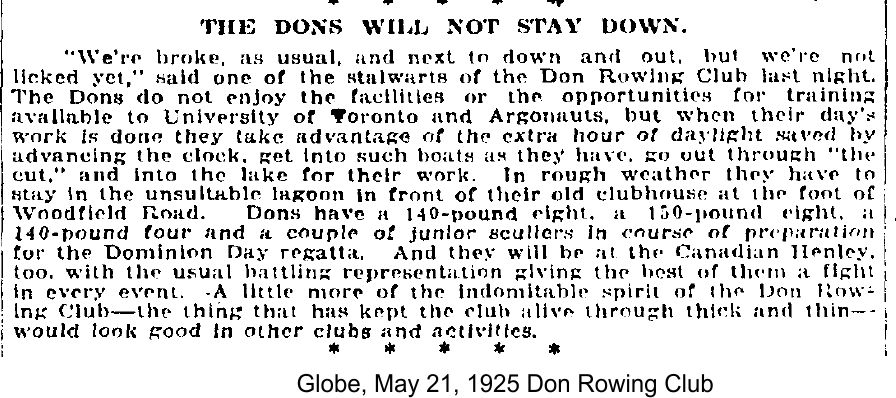
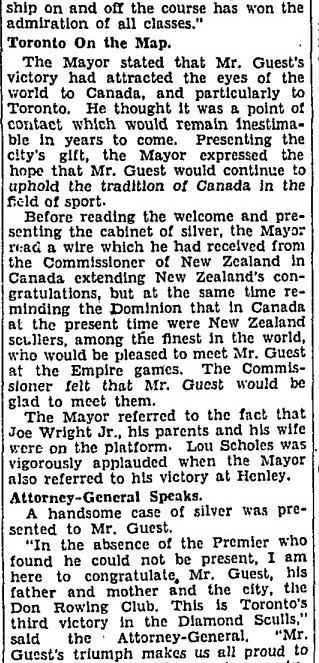
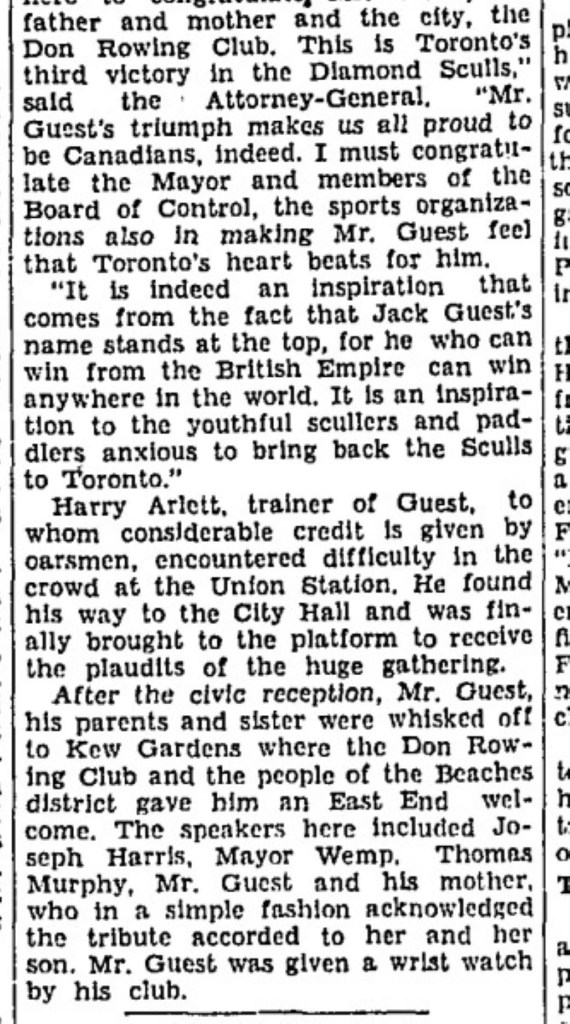
In 1921, the Don Rowing Club asked the Toronto Harbor Commission to provide a new place for their clubhouse. It did not happen. By 1924, to the consternation of local residents and the Dons, the THC’s landfill operations began gobbling up Woodbine Beach.
CITY’S SEWAGE PLANT AFFECTS ROWING CLUB.
Billed for $1,200 Rental and Ask to be Relieved
“The city ought to pay us for staying there,” said Hon. Joseph Thompson, speaker of the legislature, in addressing the board of control to-day on behalf of a deputation from the Don Rowing Club, asking relief from the payment of a bill of $1,200 for rental of the land occupied by the club at the foot of Woodfield road. Mr. Thompson said that distressing conditions had set in since the club located there, these being due to the proximity of the sewerage disposal plant. The result was that the membership had decreased. He contended that there was a verbal arrangement under which the club was to pay a nominal rental and it had not received a bill for 12 years until a month ago when one for $1,200 was presented. The board referred the request to the assessment commissioner for a report. Toronto Star, April 15, 1925.
By the late 1920s what little was left of Ashbridge’s Bay was hardly fit for man or beast. It certainly was not fit for rowing. But the Don Rowing Club (the “Dons”) persevered. but, when the City built the Morley Avenue Sewage Treatment Plant near their clubhouse, the situation became untenable. Raw sewage from the ineffective plant spilled from the inadequate plant, turning what was left of Ashbridge’s Bay into a reeking sewage lagoon.
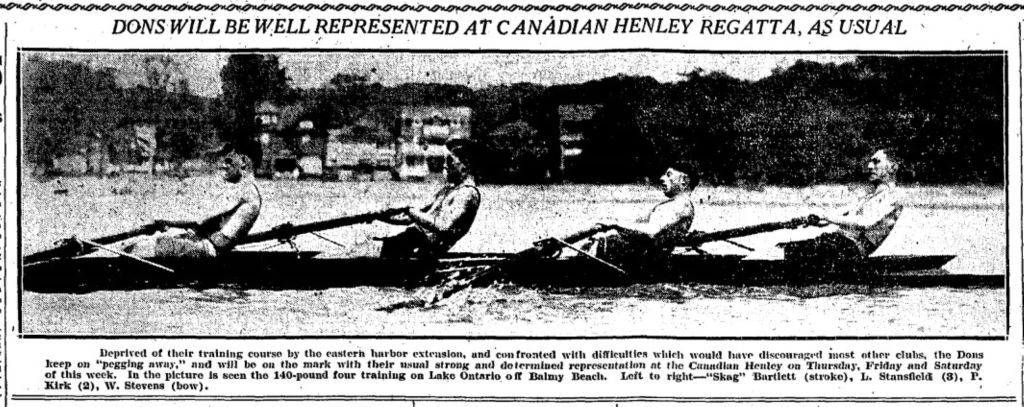
By 1927 the club was in decline. In 1927 Beach residents were concerned that an insatiable Toronto Harbor Commission would destroy the beaches even east of Woodbine Avenue and there were, in fact, plans to run rail lines right across the Beach front to serve downtown industries. Wary residents wanted the beaches placed in the hands of the Parks Committee and developed as parkland and lobbied hard for a beach park. The residents threatened to fight any attempt to industrialize the Beach. They won and plans to run a major rail corridor through the Beach came to an end while the Beach has a wonderful park. Due to their efforts Toronto has a continuous belt of parkland on the lakeshore from the R. C. Harris Water Treatment plant to the Ashbridge’s Bay Sewer Plant.
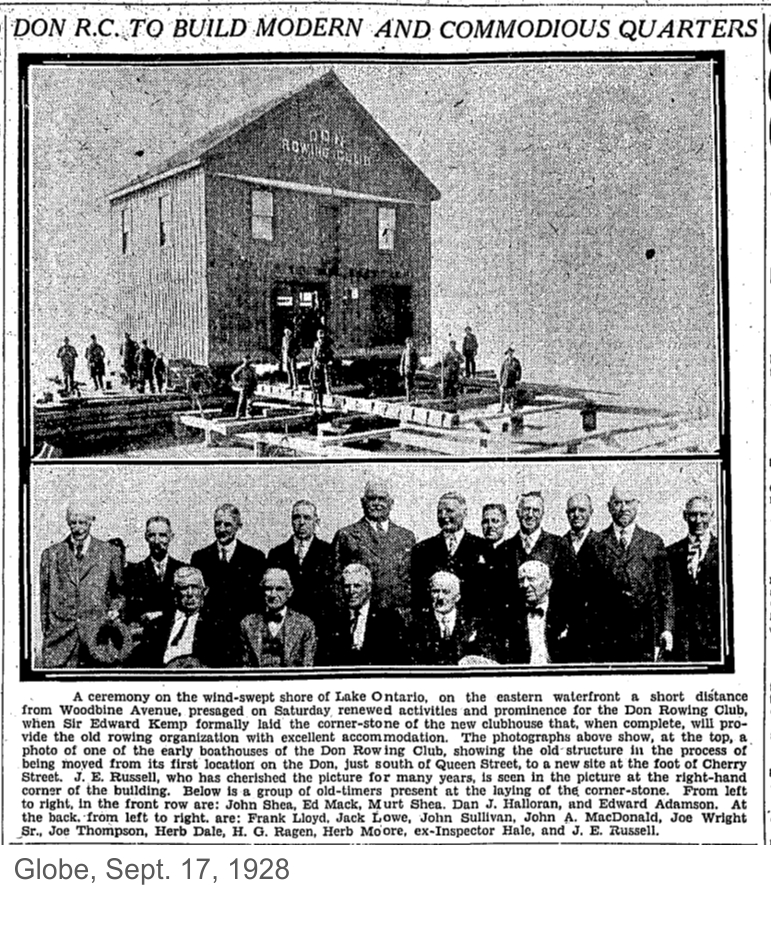
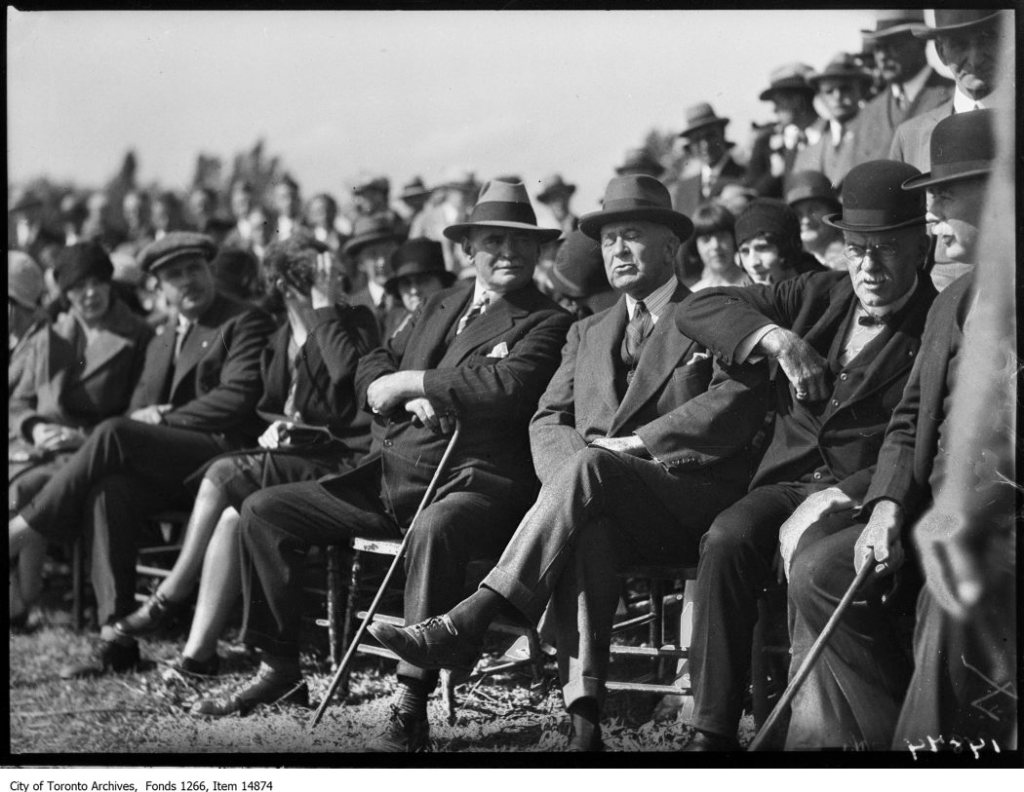
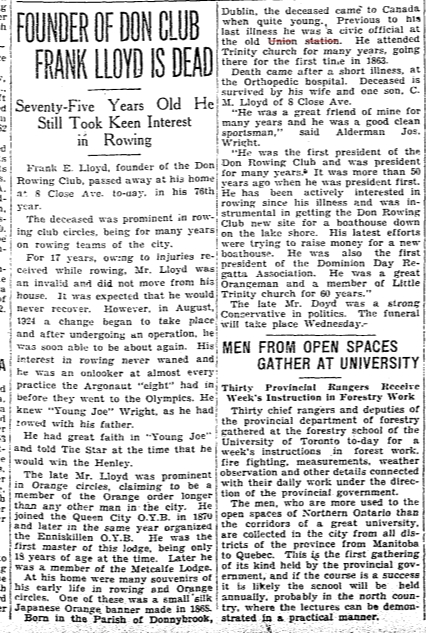
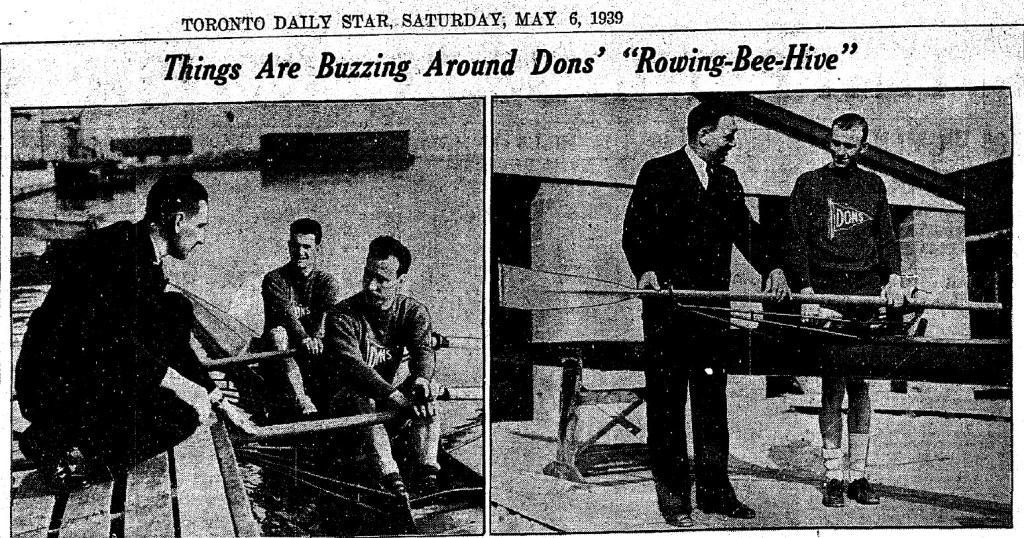
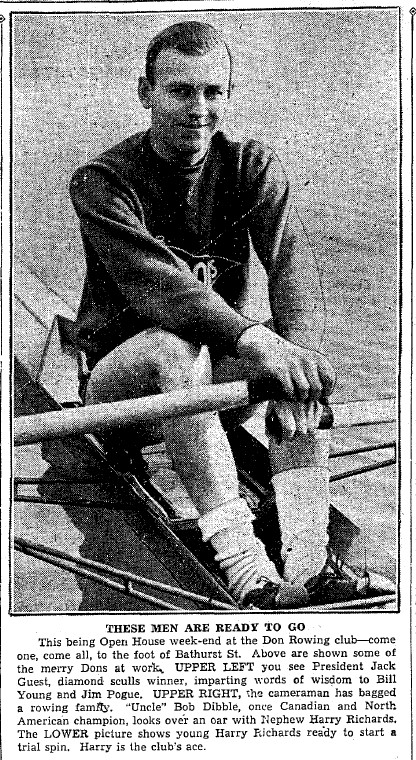
In 1928 the Dons, hoping for the best, built a new club house at Woodfield Rd., south of Eastern Avenue. Their athletes were still winning glory on the water. Their athletes were still winning glory on the water, but their founders were aging and the ties to Ashbridge’s Bay were getting thin.

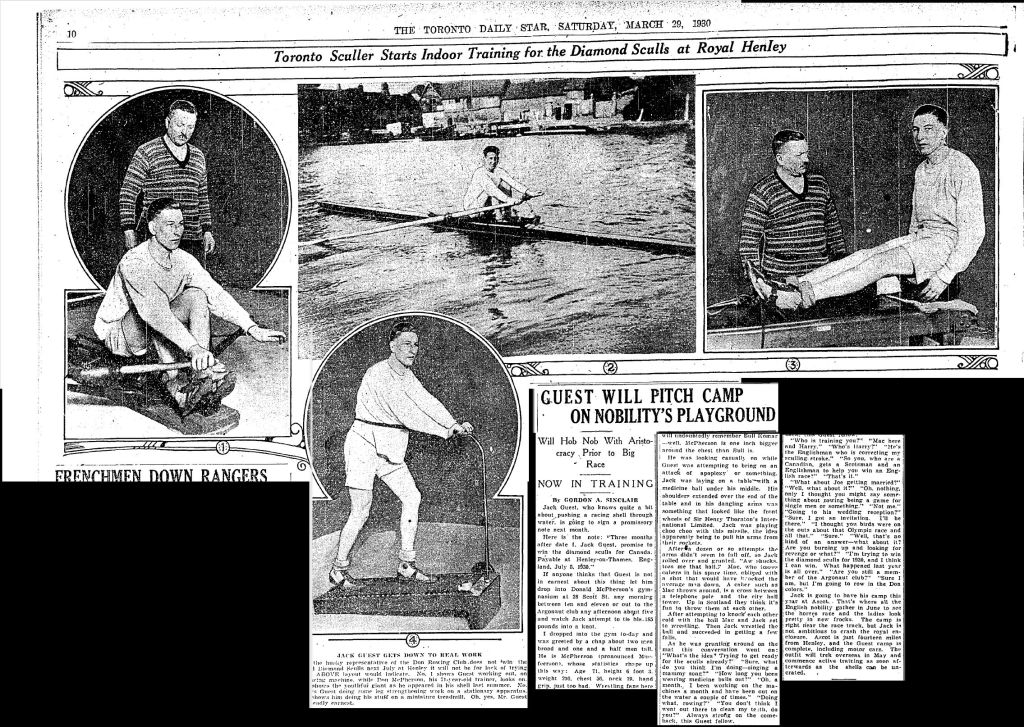
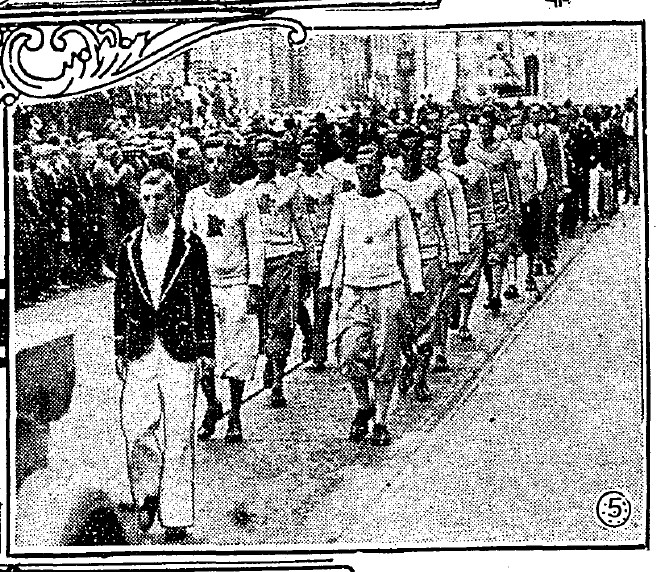
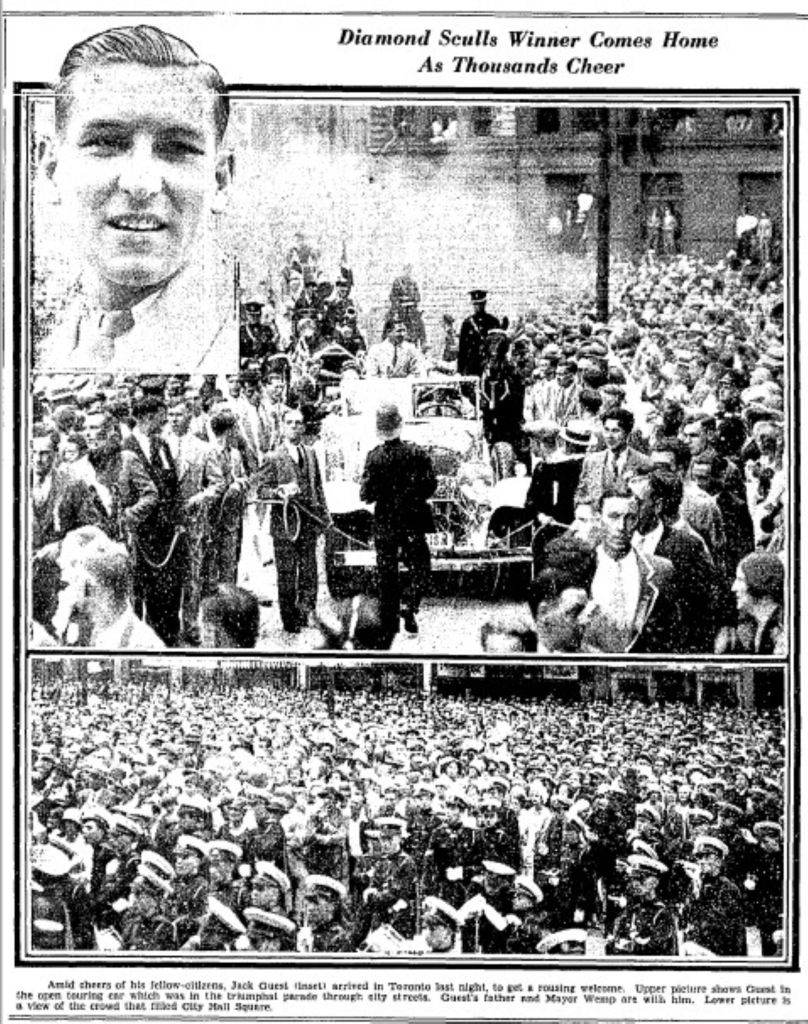
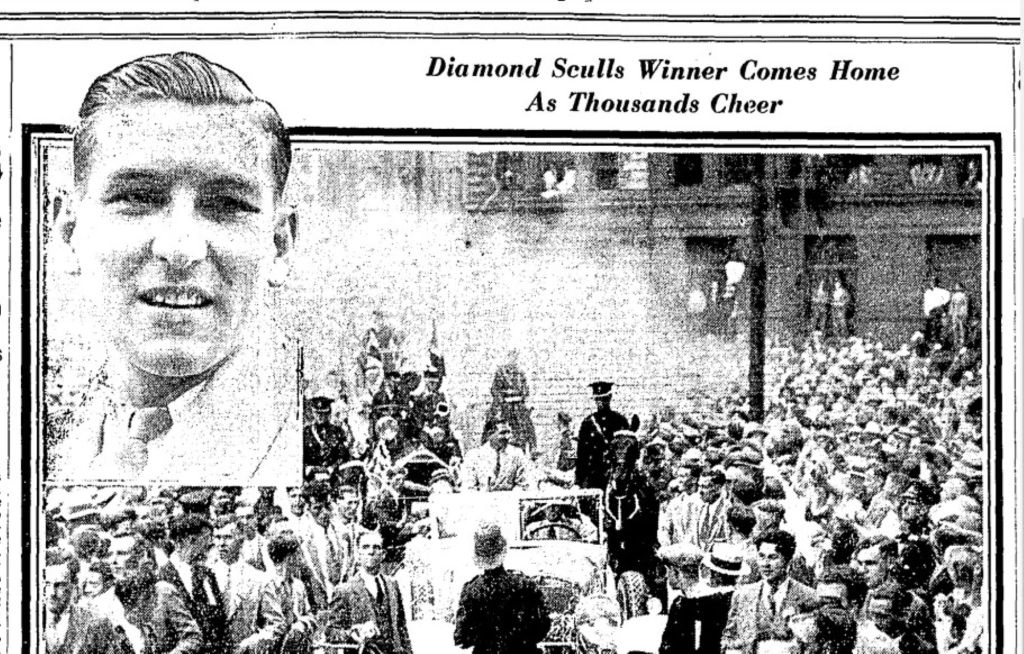
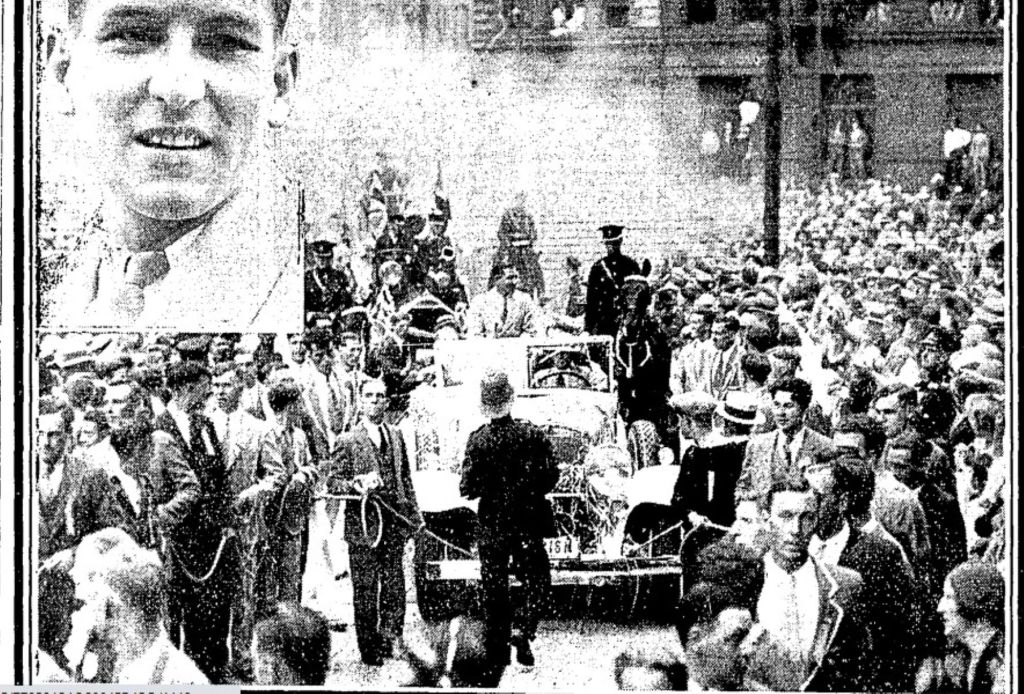
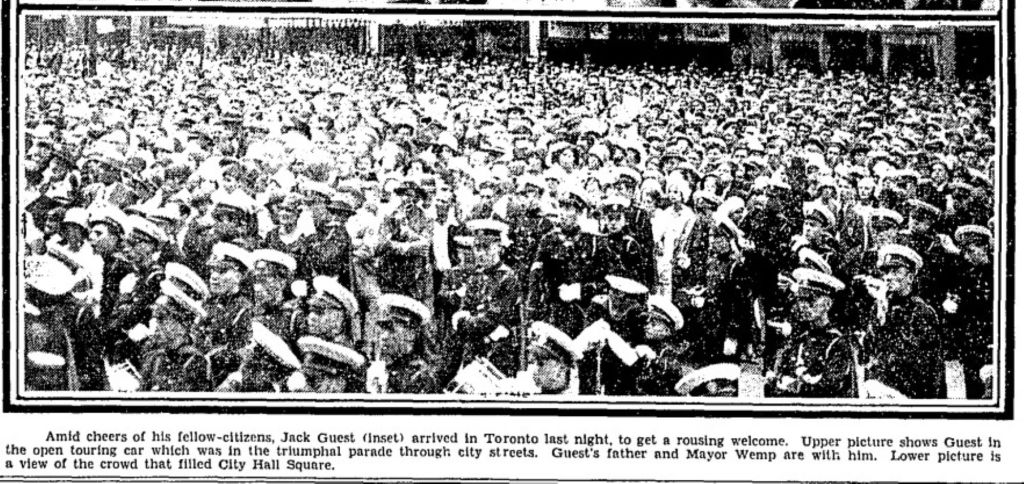
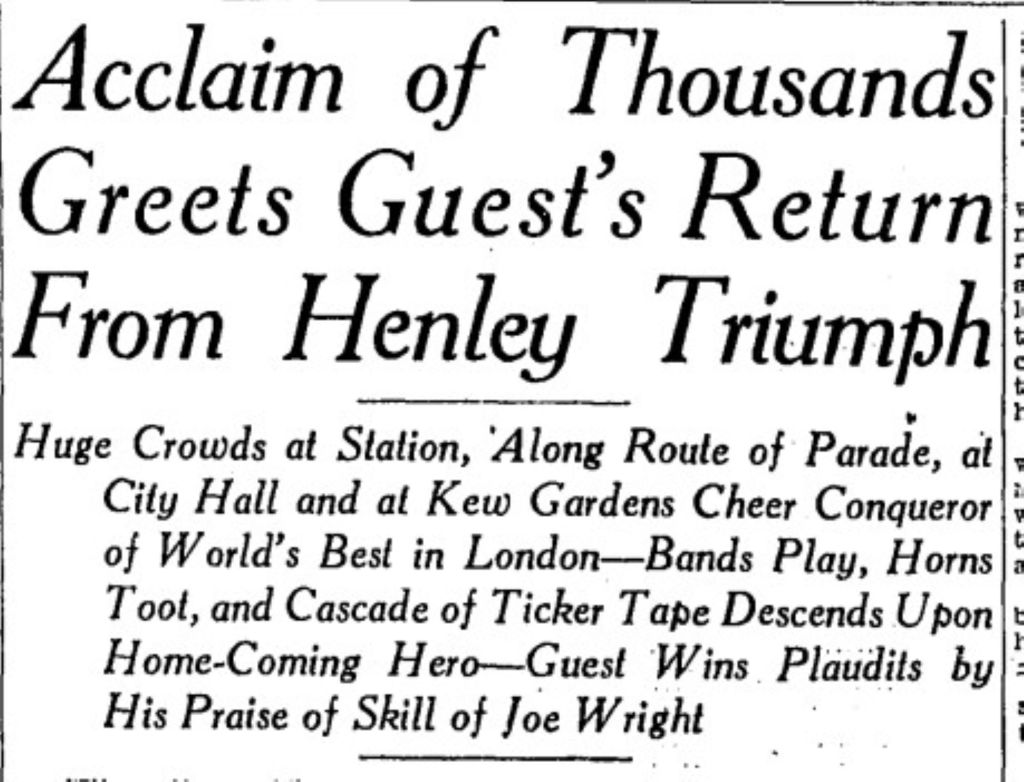
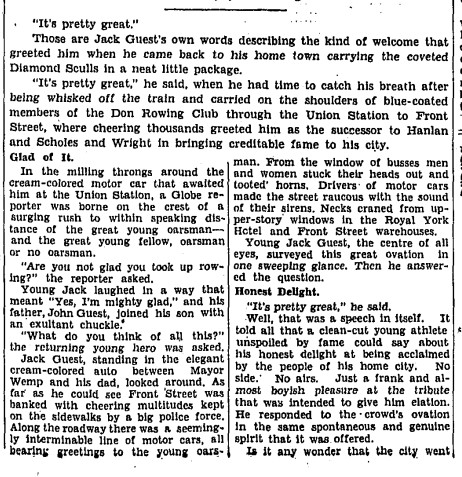
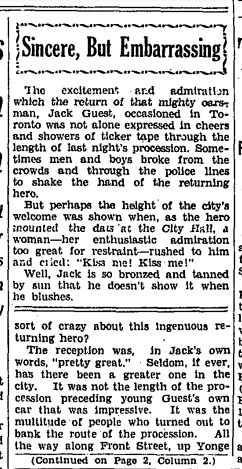

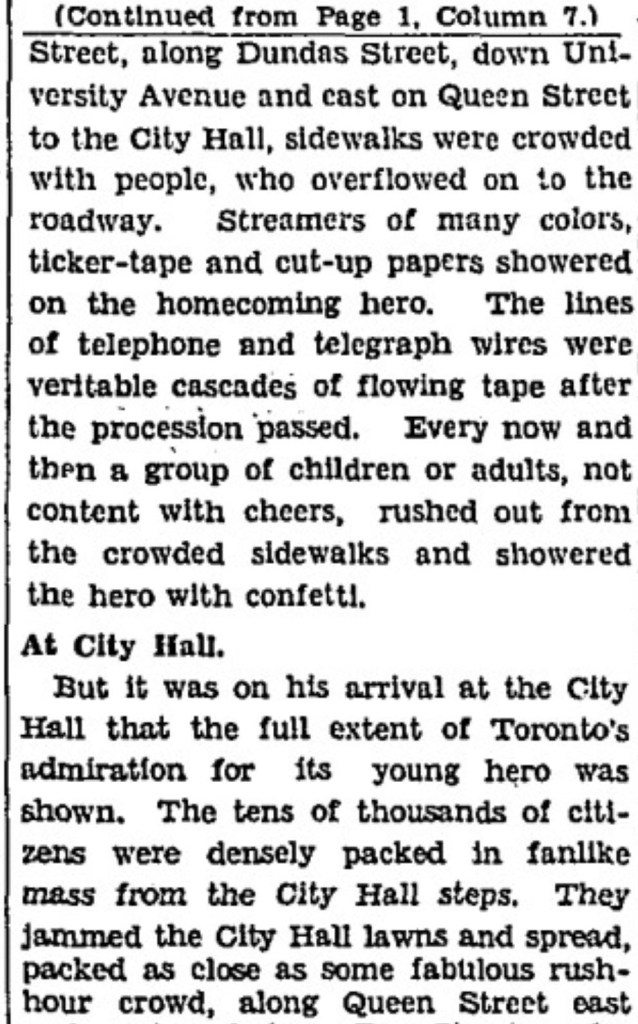
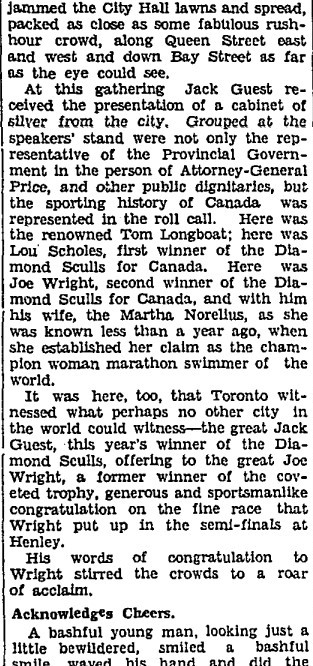
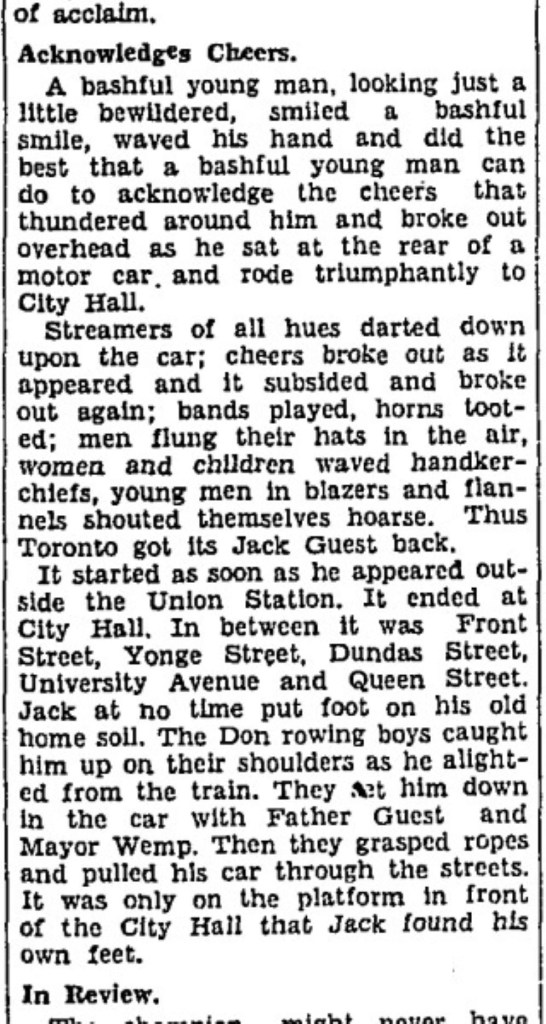
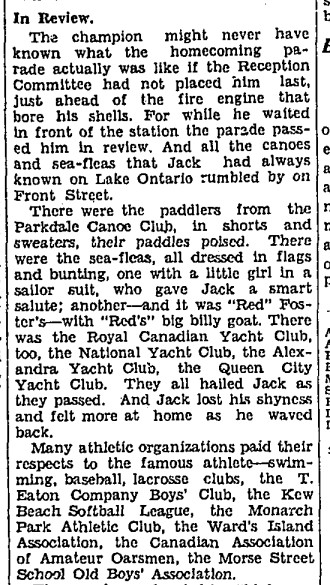
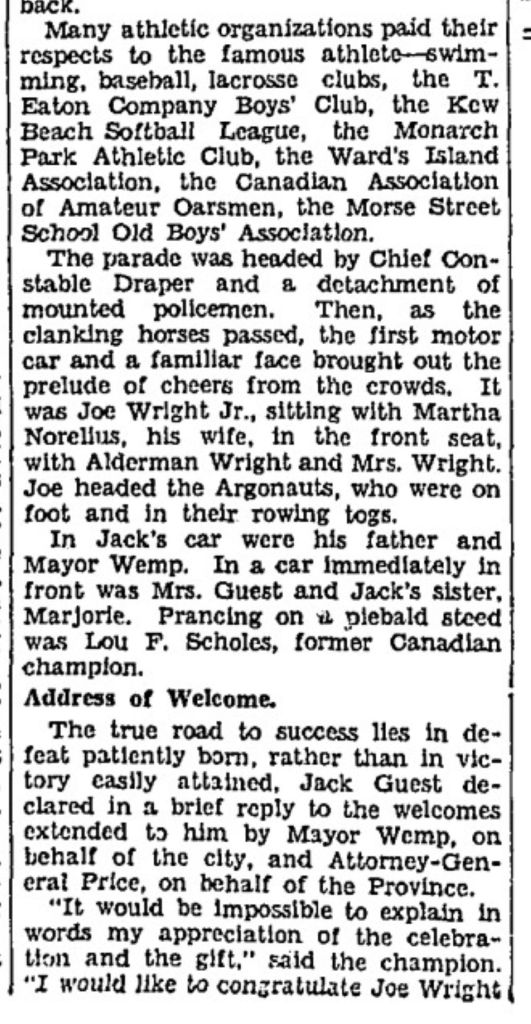

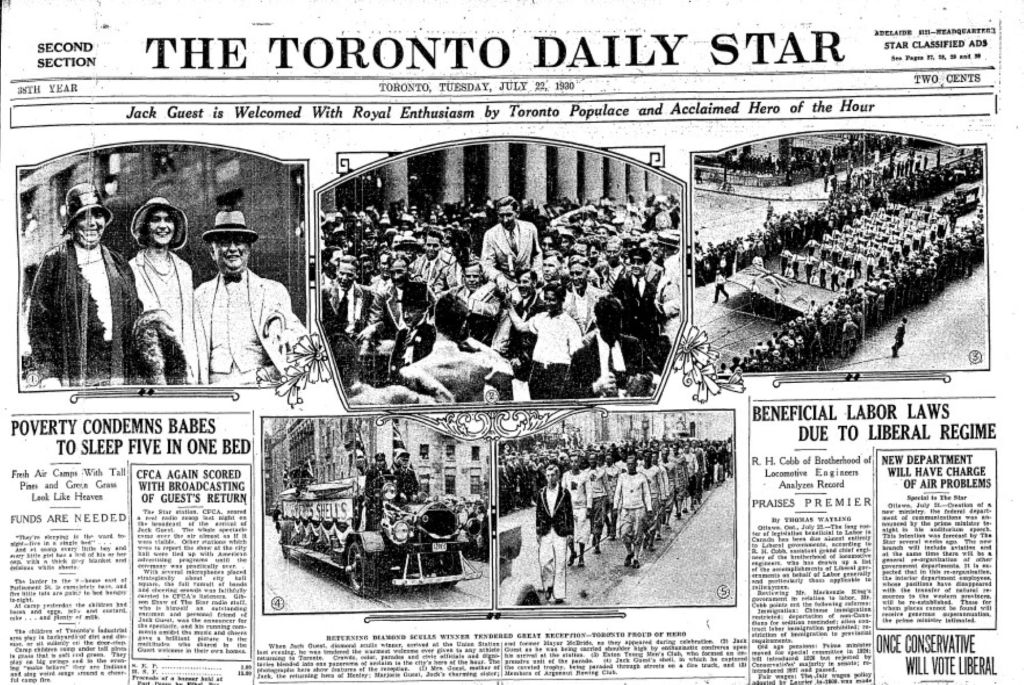
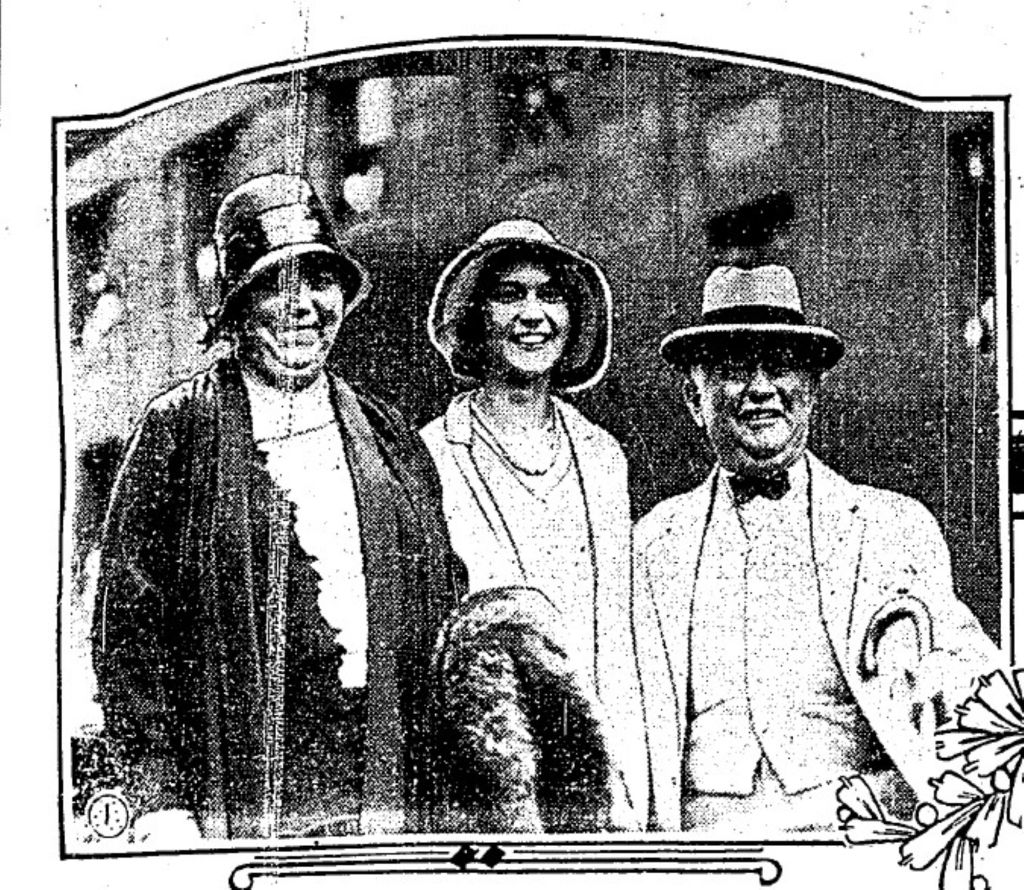
RETURNING DIAMOND SCULLS WINNER TENDERED GREAT RECEPTION – TORONTO PROUD OF HERO
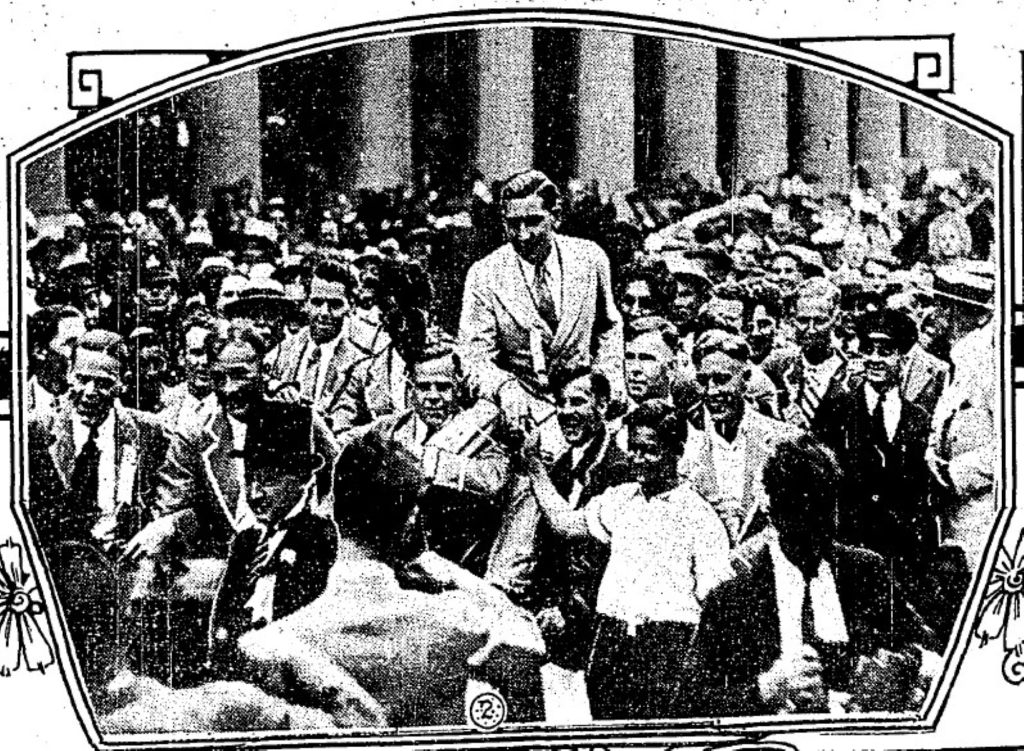
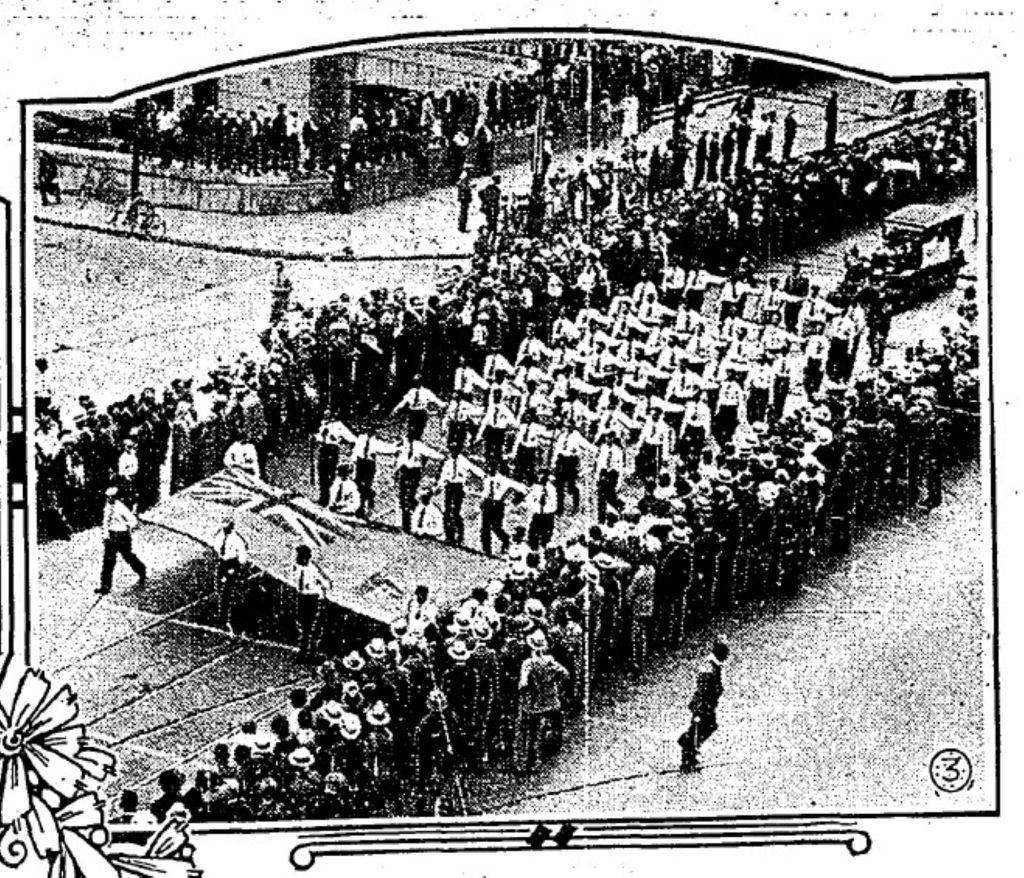
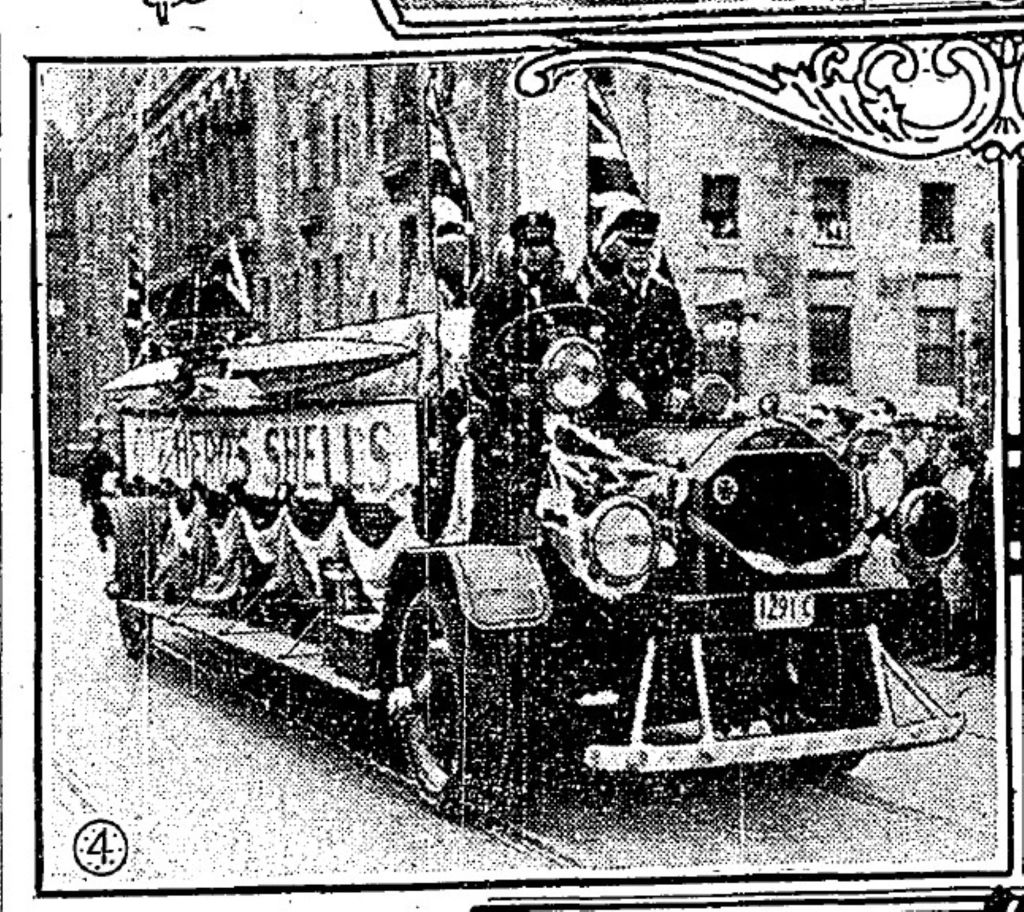
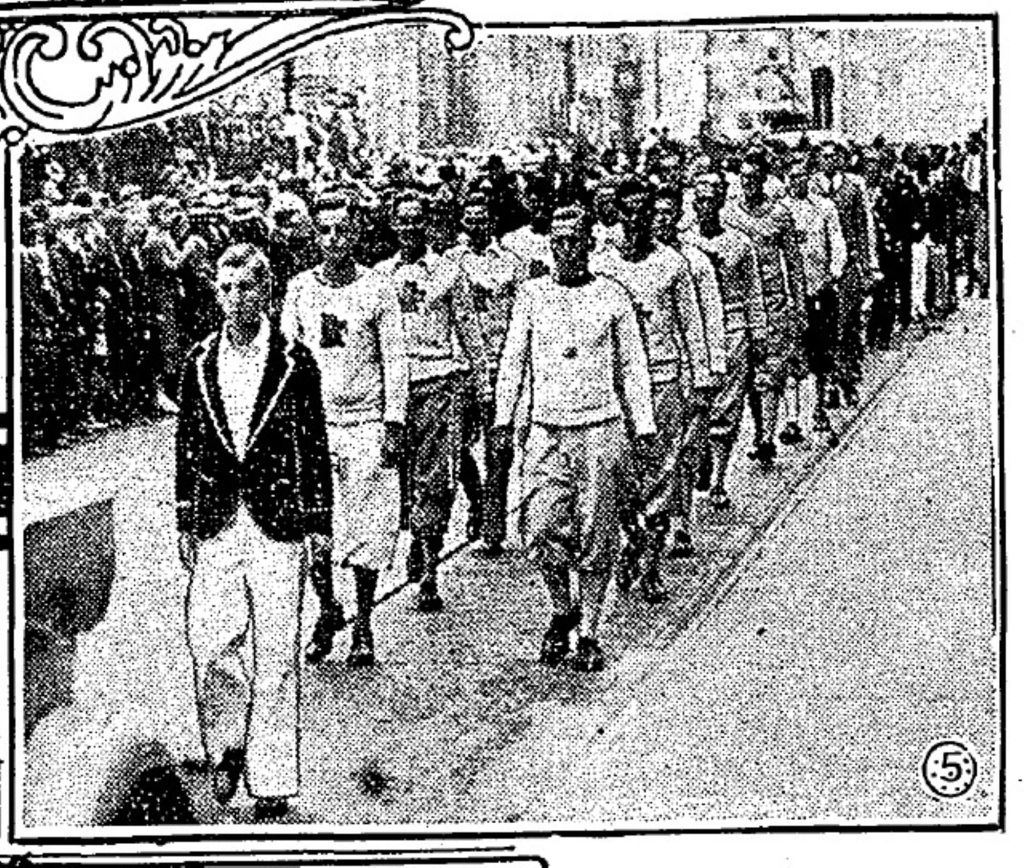
When Jack Guest, diamond sculls winner, arrived at the Union Station last evening, he was tendered the warmest welcome ever given to any athlete returning to Toronto. Crowds, color, parades and civic officials and dignitaries blended into one panorama of acclaim to the city’s hero of the hour. The photographs here show features of the reception. (1) Mrs. Guest, mother of Jack, the returning hero of Henley; Marjorie Guest, Jack’s charming sister and former Mayor McBride, as they appeared during celebration. (2) Jack Guest as he was being carried shoulder high by enthusiastic confreres upon his arrival at the station. (3) Eaton Young Men’s Club, who formed an impressive unit of the parade. (4) Jack Guest’s shell, in which he captured the coveted trophy, being paraded through streets on a fire truck, and (5) Members of the Argonaut Rowing Club. Toronto Star, July 22, 1930


In 1931 the 1928 clubhouse burned down along with some valuable boats. Bob Dibble applied for a piece of land on the new breakwater, just east of Coatsworth’s Cut, between Woodbine and Leslie Street. An ambitious plan was created for a new clubhouse. But the City changed their minds about a new breakwater and the plan fell through.

The Don Rowing Club disgusted, left for cleaner pastures in Etobicoke, never to return to Ashbridge’s Bay.
The Don Rowing Club of Mississauga is now based on the west Bank of the Credit River in Port Credit at 25 Front St N, Mississauga, ON L5H 2E1
For more about the history of the Dons here is another link:
https://www.rowontario.ca/getting-to-know-the-don-rowing-club/
 Coast Toronto
Leave a comment