A folly, “The Towers” or “Lynne Lodge”

Want to know more about this strange looking folly?
The City of Toronto, in April 2011 produced an excellent report and I quote from it below, but I’ve also added many photos from a number of different sources:
Mimico
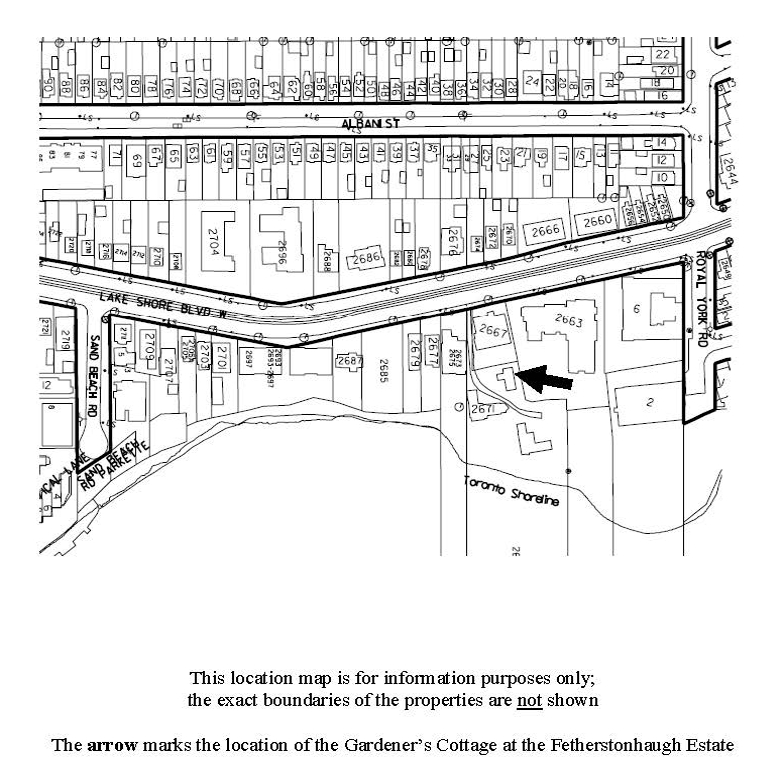
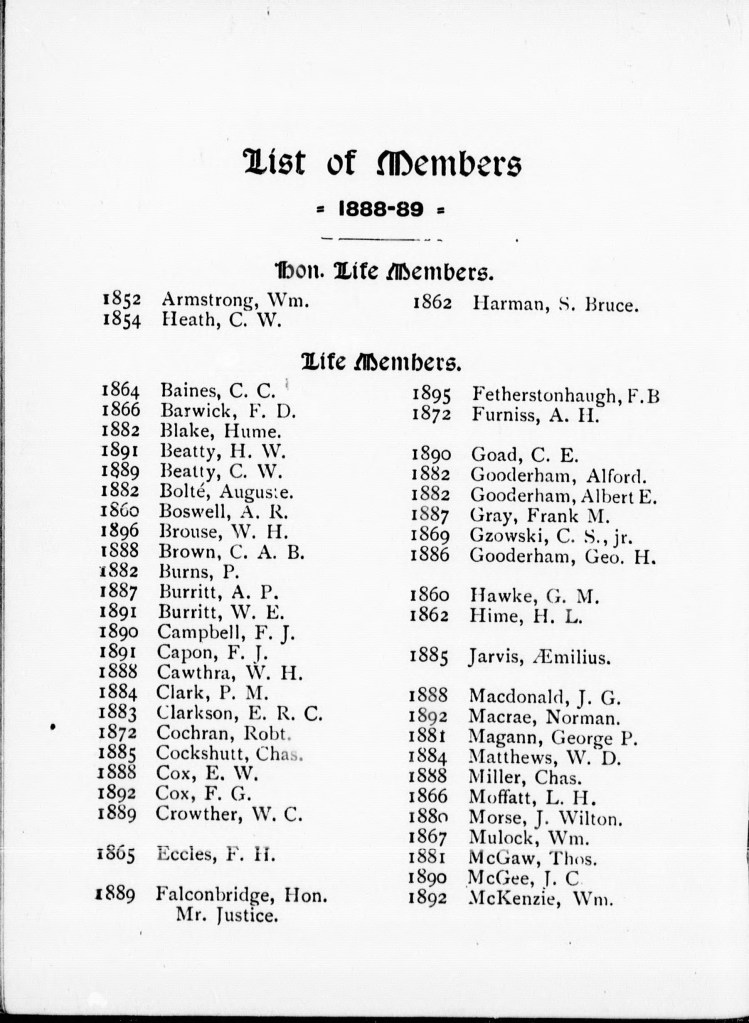
The properties at 2669-2673 Lake Shore Boulevard West are located in the community of Mimico.2 Originating as part of the Township of Etobicoke, the lands along the north shore of Lake Ontario, west of Mimico Creek, were subdivided in the mid 19th century as a model town for workers building the Hamilton and Toronto Railway (a branch of the Great Western Railway, Image 3). The 1856 plan for Mimico is illustrated in Image 2.
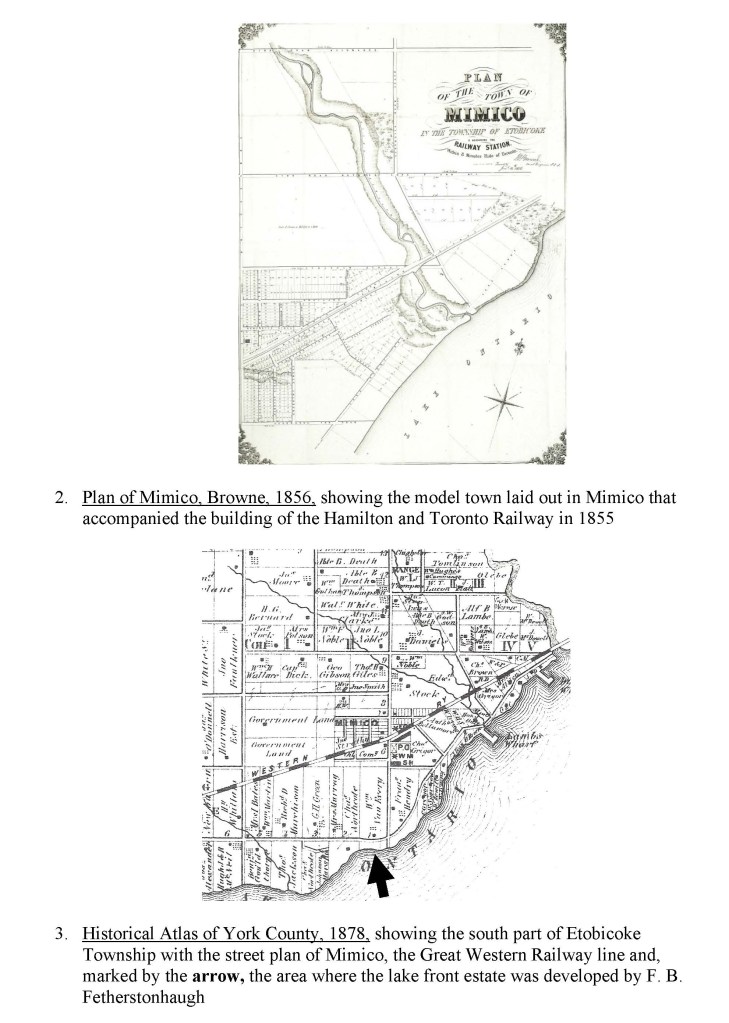
In 1890, the Toronto and Mimico Electric Railway and Light Company constructed an electric-powered radial railway along Lake Shore Road (later Lake Shore Boulevard West). Accessible by both rail lines and lake steamers, in the summer occasional and seasonal visitors were drawn to the community. As a result, “the well-treed lakefront area in Mimico, with its long sandy beach became the setting for a number of beautiful estates covering many acres. They were established for the most part by wealthy families from Toronto, first as summer homes and later, when automobiles had come into common use, as year-round residences.”3 Among the prominent people who moved to Mimico was F. B. Fetherstonhaugh who, coincidently, was the owner of Toronto’s first electric car.4

Lynne Lodge (Fetherstonhaugh Estate)
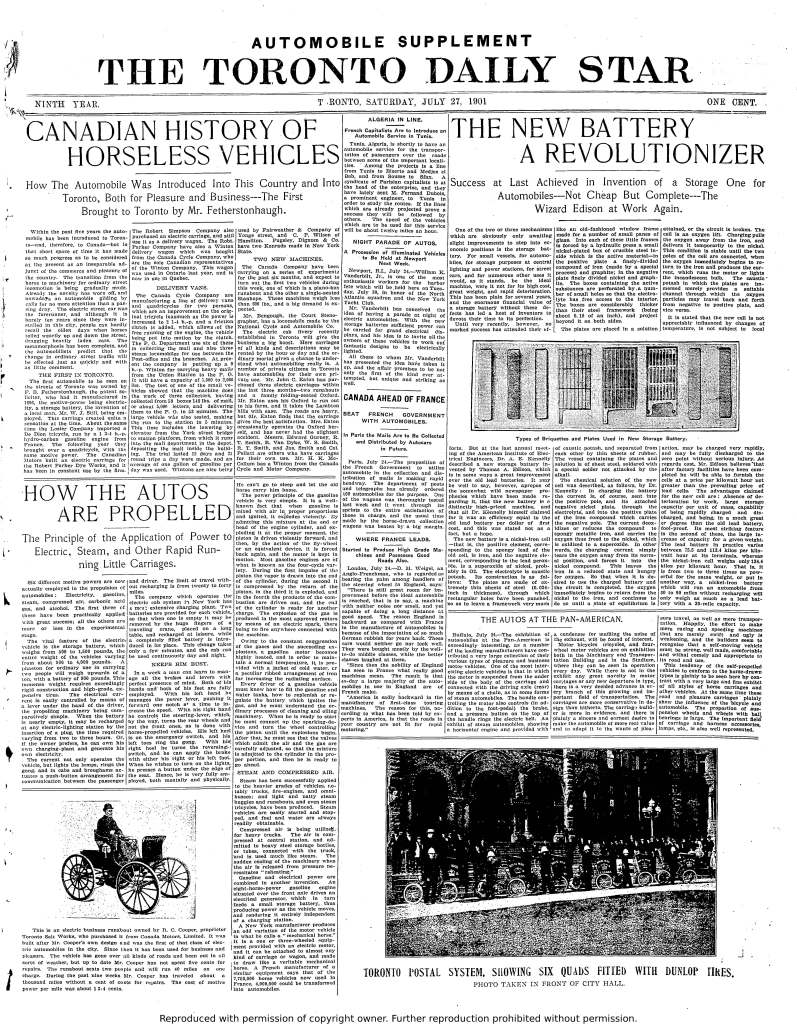
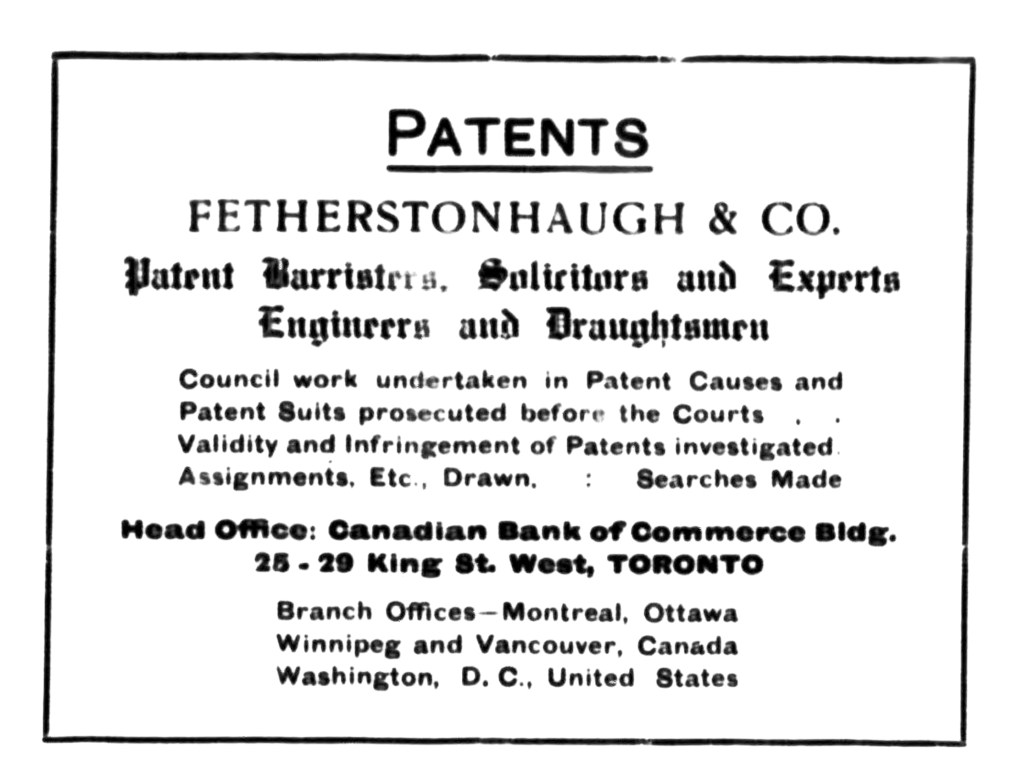
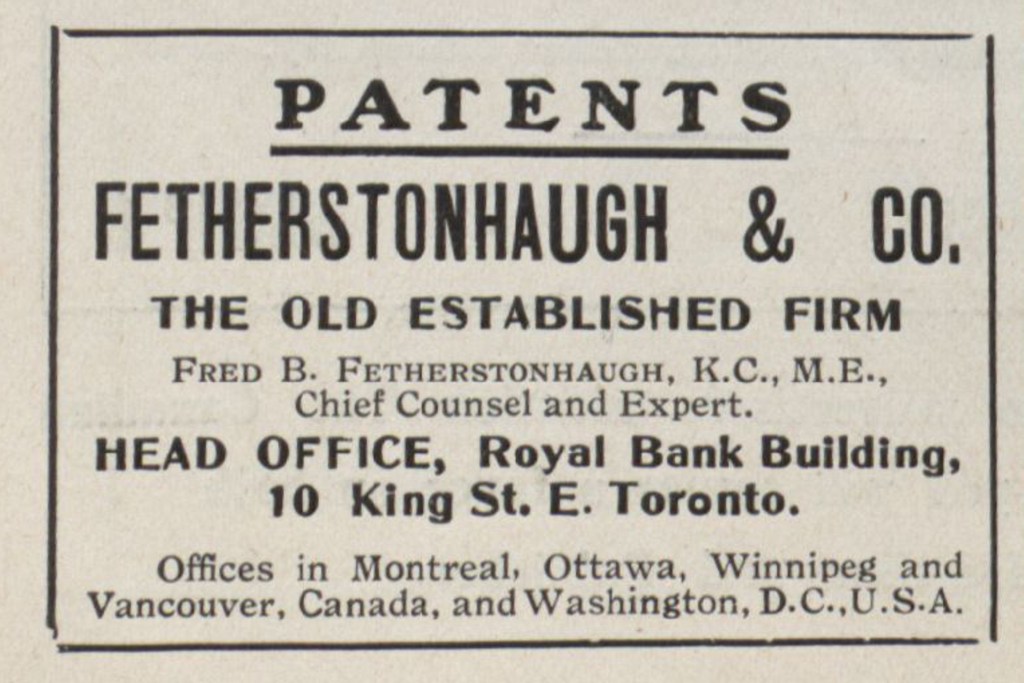
Frederick Barnard Fetherstonhaugh (1862-1945) was a Toronto attorney who founded the firm of Fetherstonhaugh and Company to specialize in patent law in 1890. Six years later, Fetherstonhaugh owned the “the first automobile to be seen on the streets of Toronto”, which …created quite a sensation at the time.”5 He resided on Spadina Avenue in Toronto, prior to relocating to Lake Shore Road (now Lake Shore Boulevard West) in Mimico where he acquired recently subdivided waterfront property west of present-day Royal York Road.
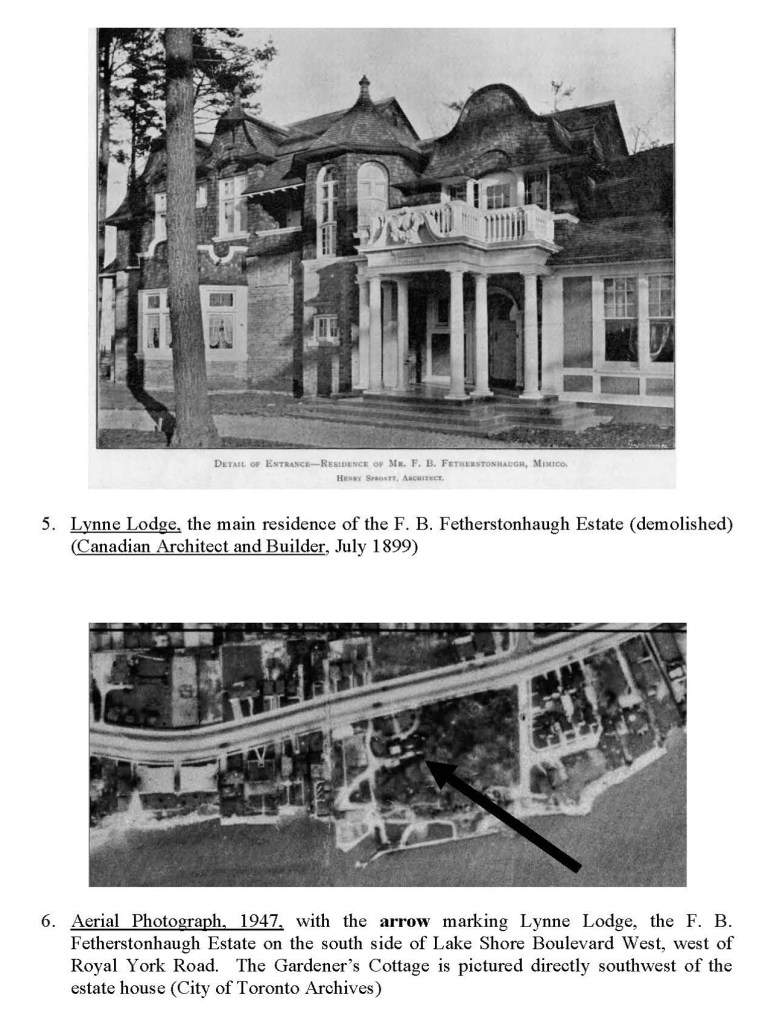
Fetherstonhaugh commissioned a residential estate named “Lynne Lodge”, which was described in the early 20th century as “the first residence built outside the city limits.”6 The site was developed by February 1899 when the property was recorded in the tax assessment roll for Etobicoke Township. That summer, the estate house was photographed for two issues of the architectural periodical, the Canadian Architect and Builder7 (Image 5). While building permits do not survive, it is probable that the adjoining building described as the gardener’s cottage was completed at the same time or
2 Located in Etobicoke Township, Mimico was incorporated as a police village in 1905, becoming a village in 1911 and a town in 1917
3 Heyes, 126
4 Toronto Daily Star (November 19, 1936). Fetherstonhaugh’s car was powered by electricity and built at the Dixon Carriage Works in Toronto
5 Toronto Daily Star (July 27, 1901)
6 Toronto Daily Star (May 2, 1932)
7 The interior was highlighted in a article in a subsequent issue in May 1902
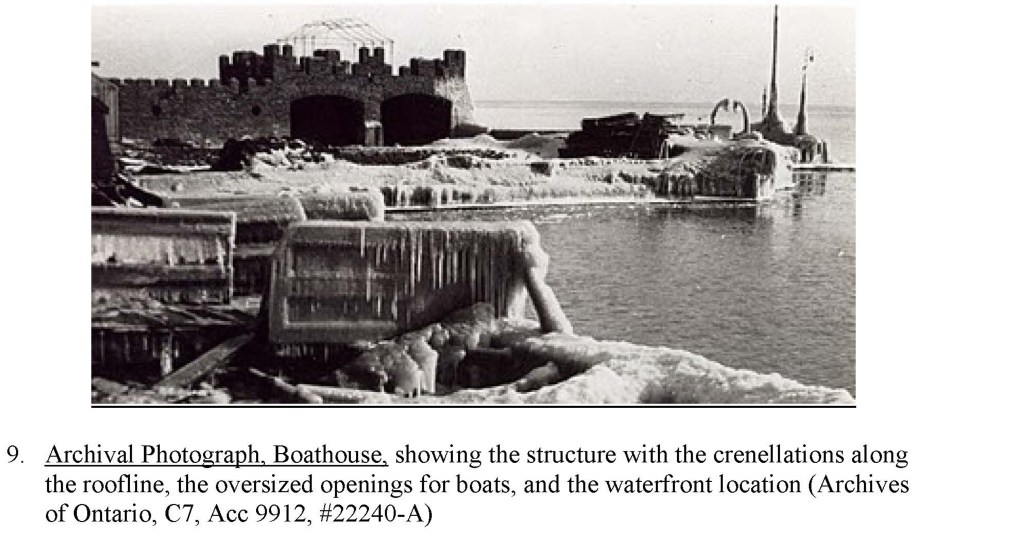
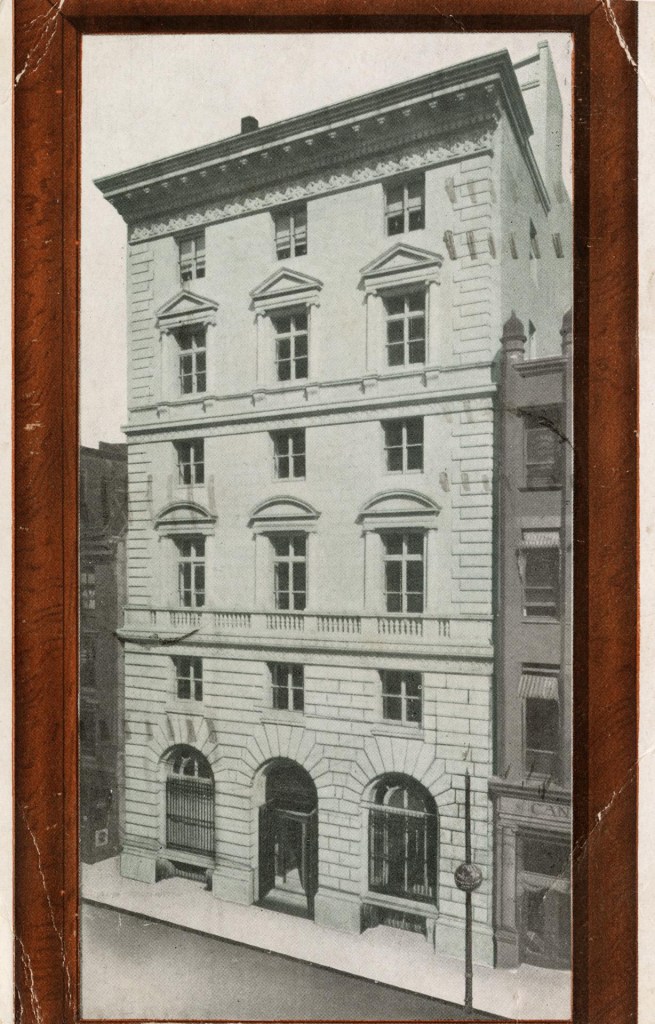
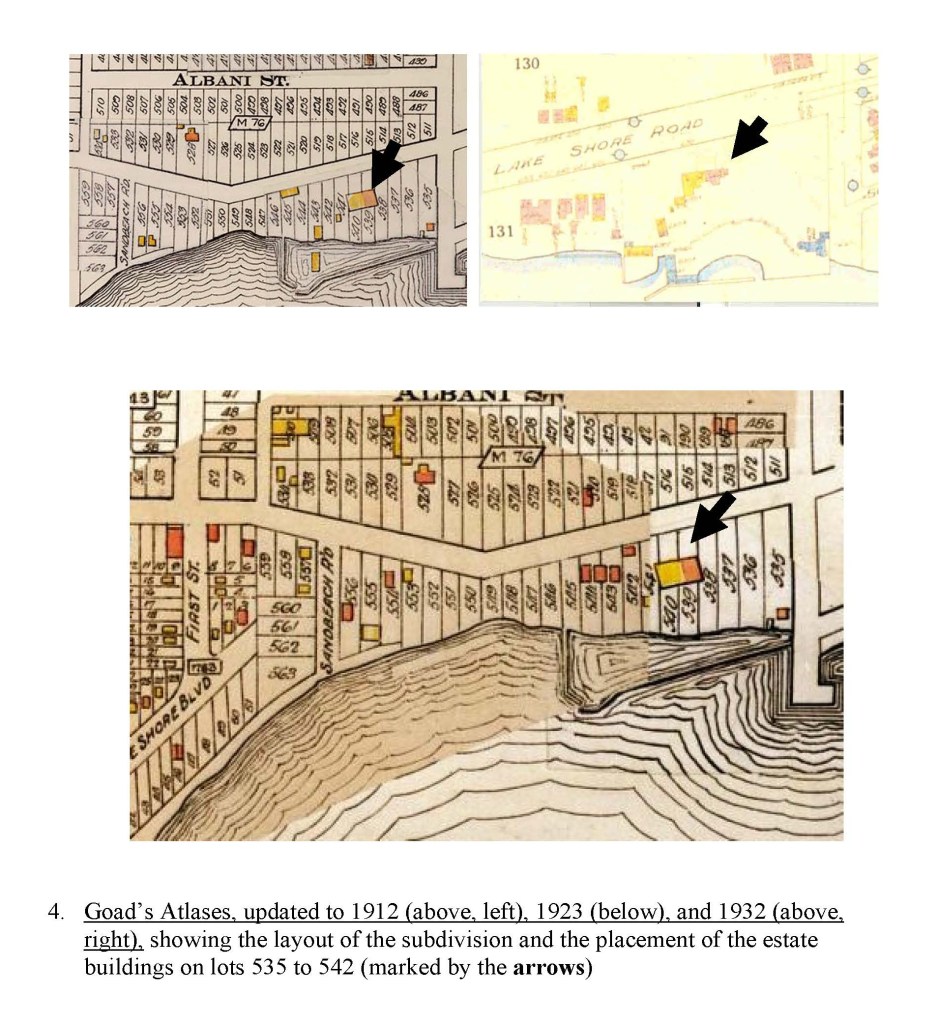
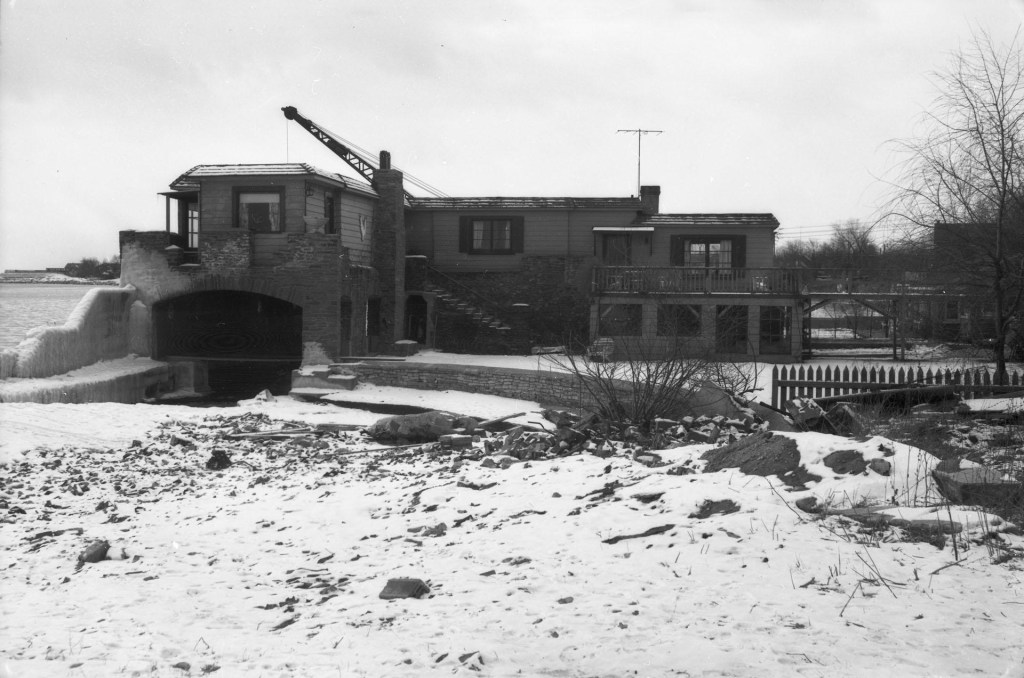
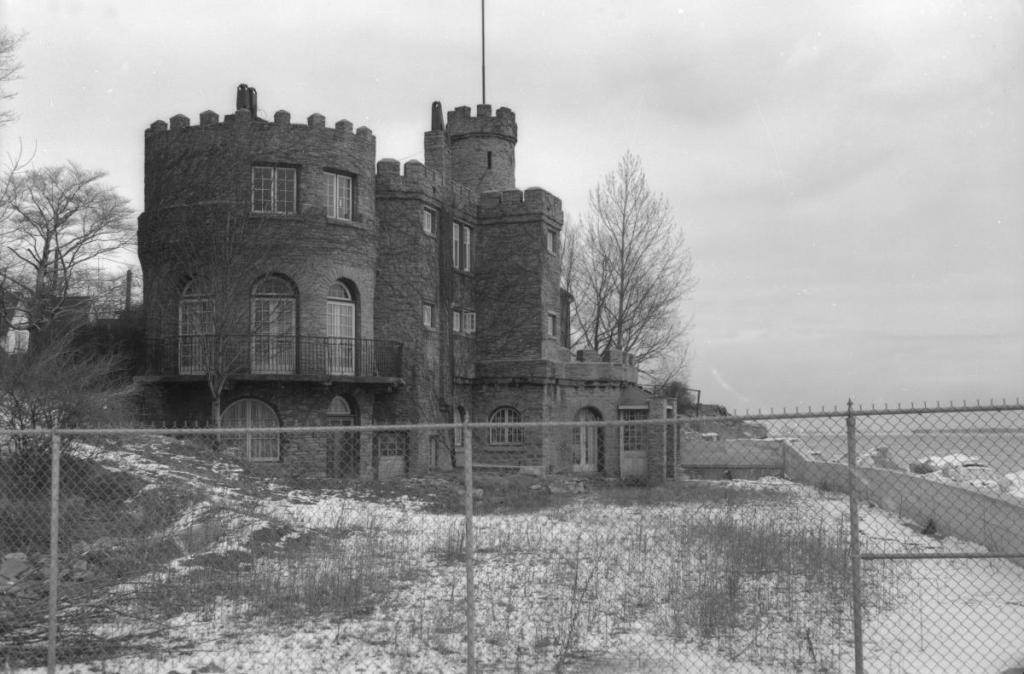
shortly after the main residence, and was designed with complementary stylistic features. A guest house known as “The Towers” (later demolished) and a substantial boathouse (now altered) displayed Neo-Gothic features, and are illustrated in the archival photographs in Section 6 (Images 8 & 9). Goad’s Atlas for 1910, with updates in the early 1920s and 1930s, illustrated the main residence and the auxiliary buildings (Image 4). In 1930, the cottage was presumably occupied by William Armitage who was employed “for many years” as the gardener on the estate.8
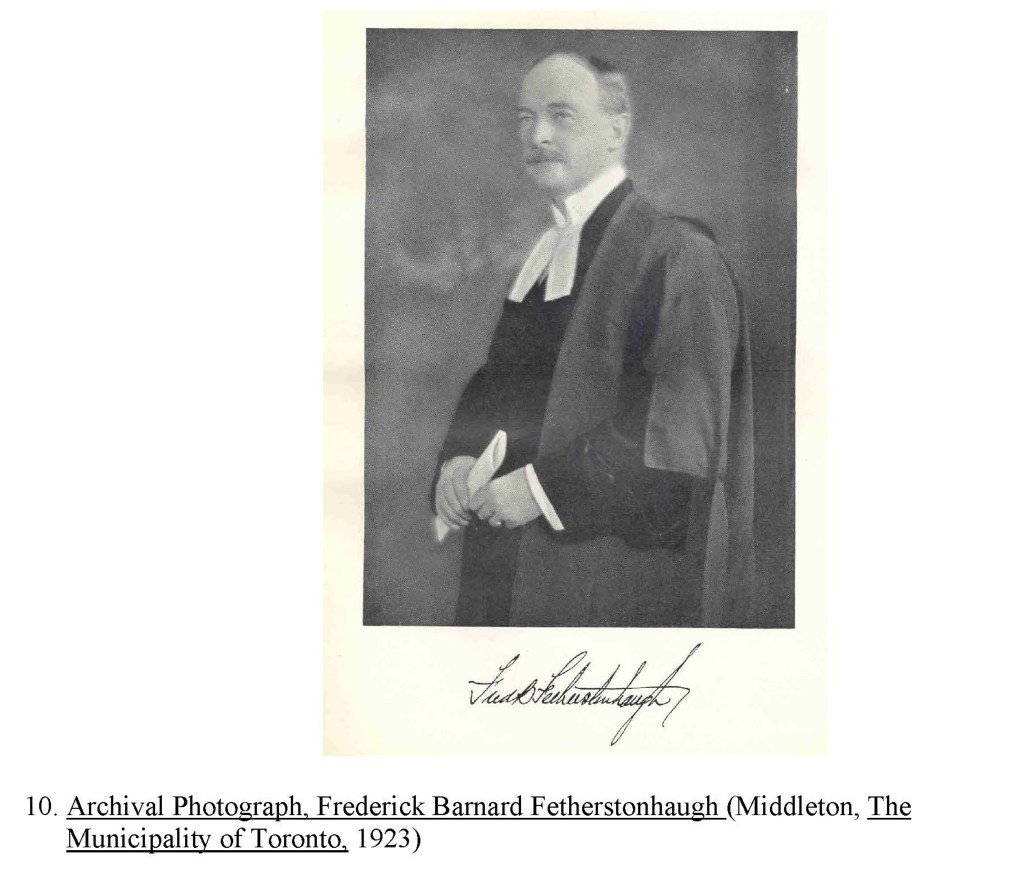
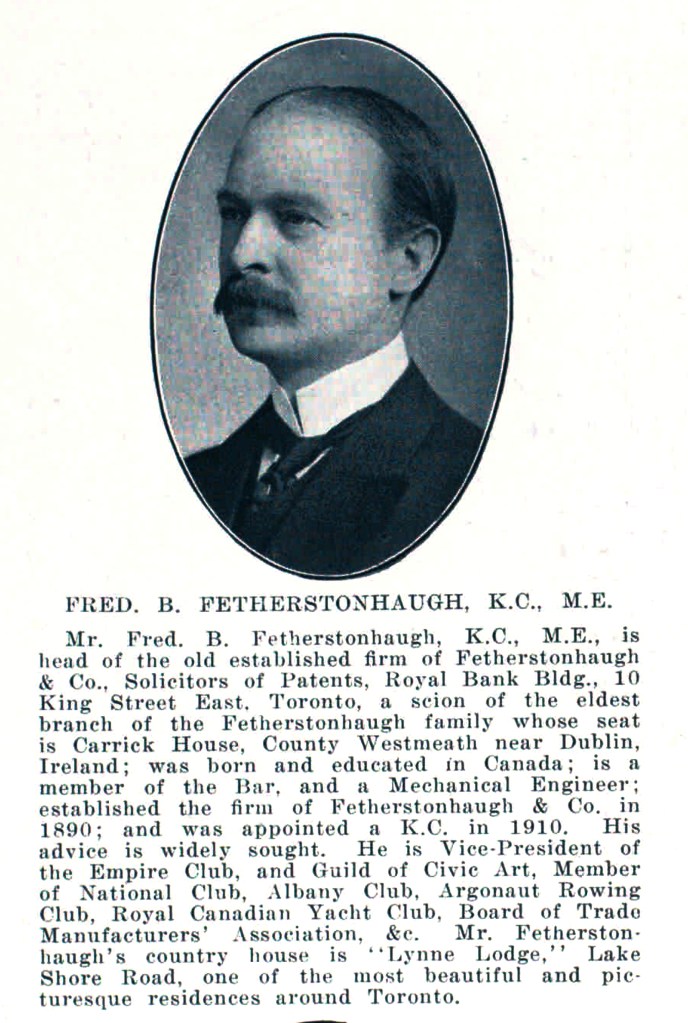
Fetherstonhaugh shared the estate with his wife, the former Marion Arabelle Rudledge, and only child, James E.M. Fetherstonhaugh (1899-1953), who later joined him in the family firm. While residing on his Mimico Estate, Fetherstonhaugh supervised his business, travelling to his branches in the United States and Canada.9 He also served as a member of the Toronto Board of Trade and the Canadian Manufacturers Association, and was appointed King’s Counsel in 1910. A founding member of the Empire Club, Fetherstonhaugh was presented to King Edward VII in 1905, and represented the club at the coronation of his successor, George V, in 1911. With his son serving as a decorated colonel in the British Army during World War I, Fetherstonhaugh offered his Mimico estate as a convalescent home for “returned invalided officers, who have risen from the ranks.”10 In 1932, two years after the death of his first wife, Fetherstonhaugh married Audrey Victoria Emaygh, who was described at the time of the ceremony as a twice- divorced 34-year-old “New York music lover” who shared his interest in music, books, “the garden and outdoors.”11 The marriage was not a success, and the subsequent divorce “resulted in a devastating financial settlement and the loss of his company.” 12When he died at his Mimico residence in 1945, an obituary reported that Fetherstonhaugh “was an ardent yachtsman and motorist” who “built the first “horseless carriage” ever made in Canada in 1893.”13 A photograph of Fetherstonhaugh is included as Image 10.
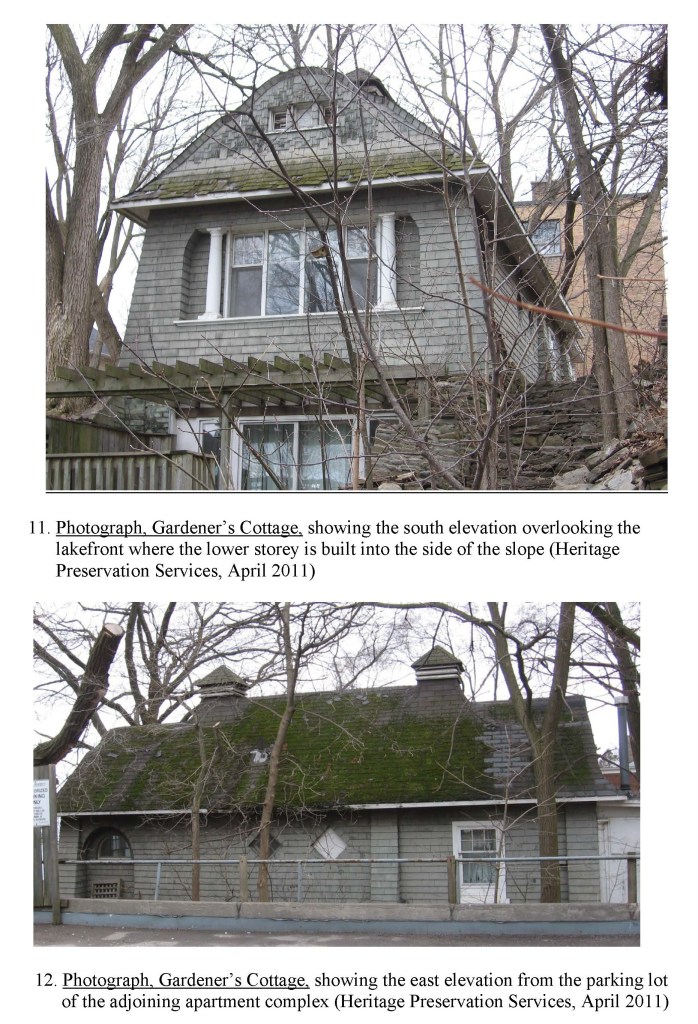
According to City Directories, by the mid 20th century the noted Canadian musician and composer, Horace Lapp (1904-1986), lived on-site, first occupying Fetherstonhaugh’s guesthouse (known as “The Towers” and illustrated in Image 8) before moving into the Boathouse.14 Lapp’s varied musical career including stints as an accompanist to the Toronto Mendelssohn Choir, conductor and composer of music for theatrical productions at famous Toronto venues including Shea’s Hippodrome, and organist for sporting events at Maple Leaf Gardens.
8 Toronto Daily Star (December 13, 1930). Armitage received a bequest in Mrs. Fetherstonhaugh’s will
9 In 1900, Fetherstonhaugh was robbed while attending his branch office in Cleveland, an event that was reported in the local newspaper
10 The Globe (August 9, 1918)
11 Toronto Daily Star (May 2, 1932). The marriage was also report in an April 1932 issue of The New York Times
12 Harrison, unpaged
13 The Globe, July 9, 1945
14 Harrison, unpaged
Henry Sproatt, Architect
“Lynne Lodge,” the main residence at Fetherstonhaugh’s Mimico estate was designed by Henry Sproatt (1866-1934), one of Canada’s best known architects in the early 20th century, and the complementary design of the Gardener’s Cottage suggests that it was part of Sproatt’s commission.15 The son of an architect, Sproatt received training with Toronto practitioner A. R. Denison before gaining experience in New York City. He was a partner in the Toronto architectural firm of Darling, Sproatt and Pearson in the early 1890s before forming an association with Ernest Rolph (1871-1958), a draughtsman in the latter practice, in 1901. While Sproatt and Rolph were well versed in all building types, they received national recognition for their Neo-Gothic designs for Hart House on the University of Toronto’s St. George Campus.
Sproatt accepted the commission for Lynne Lodge during the brief period at the close of the 19th century when he worked alone. The photographs of the main residence found in issues of The Canadian Architect and Builder in 1899 name Sproatt as the architect (Image 5). While the Gardener’s Cottage shares the Queen Anne Revival detailing of the estate house, the guest house (no longer extant) and boathouse (in place, but altered) display the Neo-Gothic styling associated with Sproatt’s designs during the World War I era. Sproatt’s ongoing involvement in the development of the estate is likely, particularly since he was a personal associate of Fetherstonhaugh’s who served as a pallbearer at the funeral of the attorney’s first wife (Marion Rudledge Fetherstonhaugh) in 1930.16

i. ARCHITECTURAL DESCRIPTION
Gardener’s Cottage
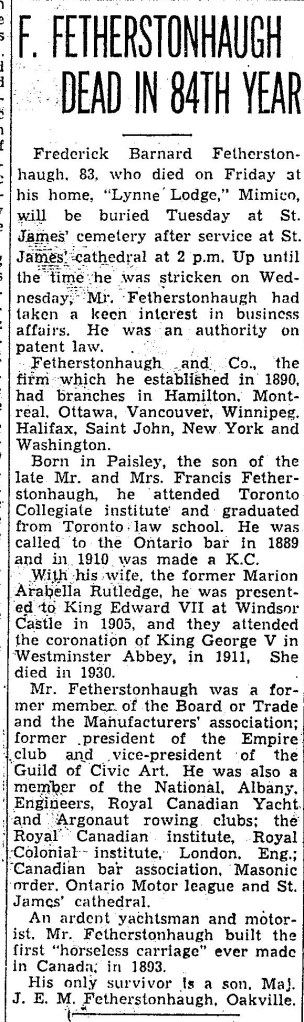
A comparison of the contemporary photographs of the Gardener’s Cottage (found on the cover of this report and included as Images 11-13) with the archival view of the main residence (Image 5) indicates that the modest auxiliary building was designed to complement the estate house’s Queen Anne Revival detailing. The style was the most popular for residential architecture at the end of the 19th century, and was “characterized by a picturesque, irregular massing of forms, and a rich variety in materials and details”.17 Lynne Lodge displayed the mixture of classical and medieval elements identified with Queen Anne Revival, including the mixture of window shapes that included round-arched openings, the bay window with battlements, a tower with a conical roof, a classically-inspired entrance porch, and an intricate roofline that incorporated dormers and a Flemish gable. The diminutive Gardener’s Cottage (Images 11-13) plays homage to the estate house with its roofline, classical flourishes and window shapes.
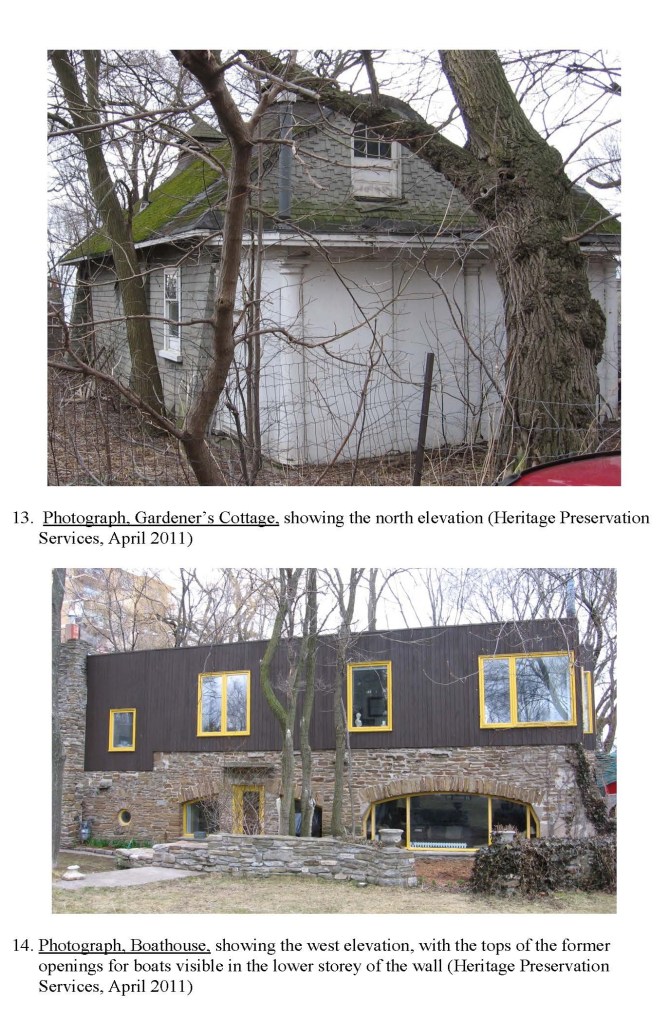
The Gardener’s Cottage features an L-shaped plan covered by a gable roof with flared eaves, segmental-arched gables on the west, north and south slopes (the latter with
15 Sproatt’s design for the main residence and the gardener’s cottage is cited in the entry for the architect in The Biographical Dictionary of Architects in Canada, 1800-1950,
16 Toronto Daily Star, November 11, 1930
17 Kalman, 613
window openings), and twin monitors. Clad with wood shingles with wood detailing, the structure rests on a stone base that is exposed at the south end. The cottage is oriented to the west where the main entrance is placed on the ‘ell’ in a flat-headed surround that is embellished with an entablature and sidelights. On the long west and east walls, buttresses organize the fenestration, which consists of different sized flat-headed and round-arched openings, some of which are inset. The decorative detailing includes classical columns that mark the north wall, as well as large window opening on the south elevation. The stone base has been altered at the south end with the addition of sliding- glass doors. The structure is placed on the edge of the ridge where the south wall is accessed by stone steps and overlooks the waterfront and Lake Ontario below.

Boathouse
The original appearance and setting of the Boathouse is illustrated in the archival photograph attached as Image 9. As shown in the contemporary photographs, the structure was modified by an upper storey, the alteration or addition of openings, and changes to the west end of the site where the former openings for boats were converted to windows. In its cladding and original castle-like design, the Boathouse complemented the guesthouse named “The Towers”, which is pictured in Image 8 and later demolished.
ii. CONTEXT
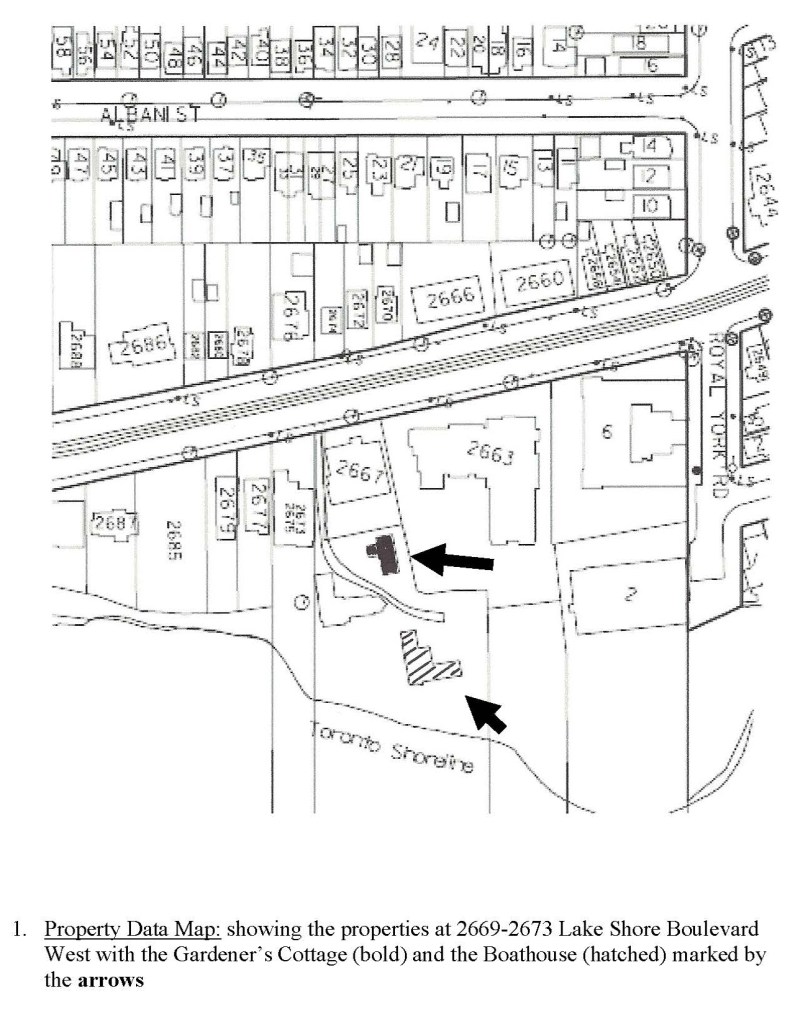
The remnants of the Fetherstonhaugh Estate at 2669-2673 Lake Shore Boulevard West are found on the south side of the street, west of Royal York Road. However, the buildings are not visible from Lake Shore Boulevard West where they are concealed by the apartment complexes and house form buildings dating to the post-World War II era.
The Gardener’s Cottage, which was built behind (southwest of) the main residence, faces west toward a driveway that leads from Lake Shore Boulevard West (where it is entered west of the Eldorado Apartments) and down a slope toward Lake Ontario. The cottage sits on the top of this ridge, where it overlooks the Boathouse that is placed near the shore of Lake Ontario below. With the alterations to the Boathouse, the land adjoining it to the south and west was infilled so that the structure is removed from the water. The properties containing the Gardener’s Cottage and Boathouse retain some of the landscaping associated with the Fetherstonhaugh Estate, including stone steps, break walls and a well, along with frontage on the waterfront (Images 15 and 16). from Intention to Designate under Part IV, Section 29 of the Ontario Heritage Act – 2669-2673 Lake Shore Boulevard West, City of Toronto, April 20, 2011 available on line at chrome-extension://efaidnbmnnnibpcajpcglclefindmkaj/https://www.toronto.ca/legdocs/mmis/2011/pb/bgrd/backgroundfile-37649.pdf
Others also tell the story of “The Towers” and “Lynne Lodge” including this excellent article written by Denise Harris of the Etobicoke Historical Society. Here is the link:
https://www.etobicokehistorical.com/fetherstonhaugh-house.html

 Coast Toronto
Leave a comment